
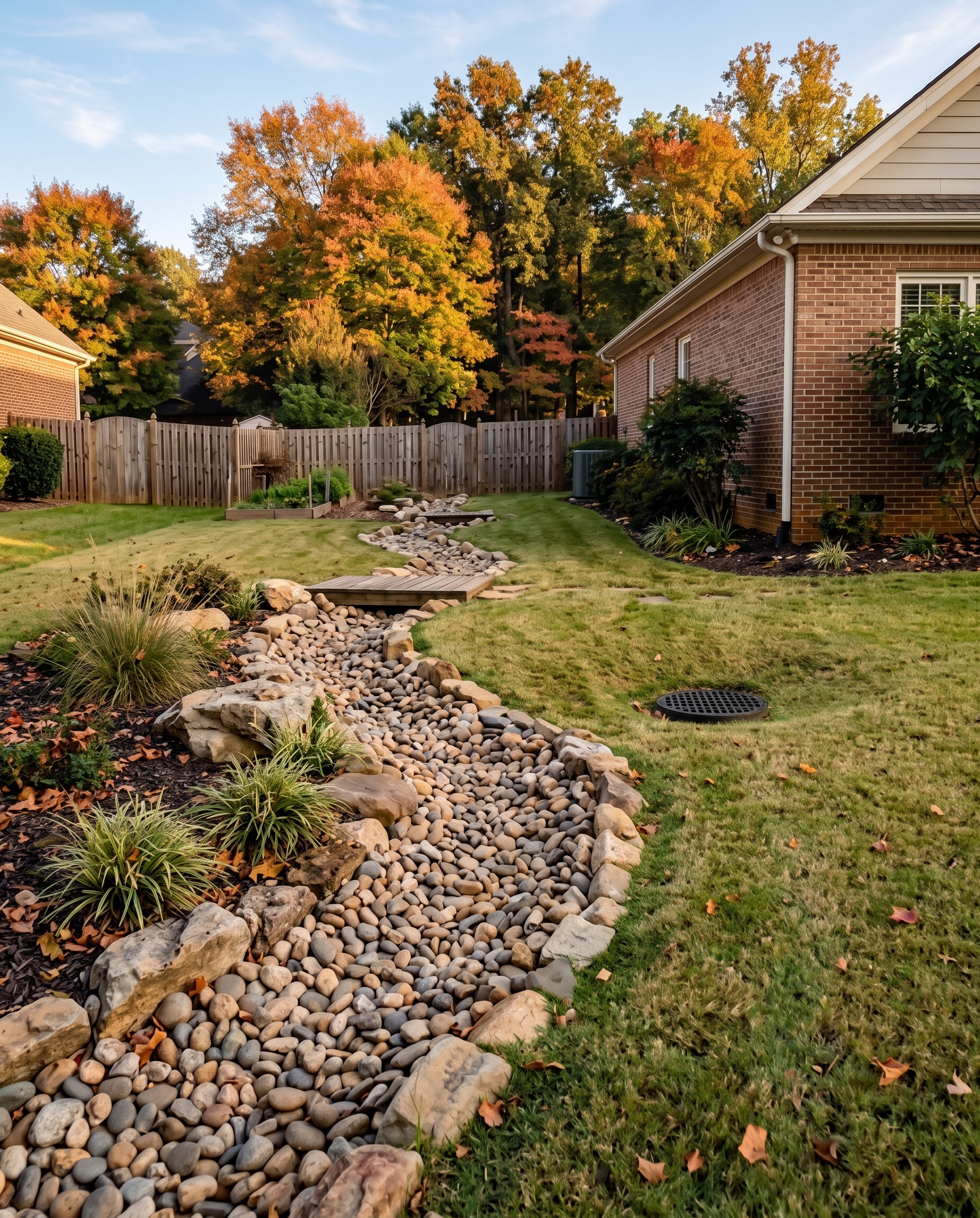
Why Fall Is the Best Time to Fix Your Yard’s Drainage Problems
If you're planning a new landscape, patio, retaining wall, or outdoor living space, you're probably wondering one thing first: "How much is this going to cost?" The honest answer is that no two projects are exactly alike. While many websites publish price ranges or "cost per square foot," those numbers rarely reflect the unique details of your property, your goals or the materials you choose.
Heavy summer storms and hurricane-season rainfall have a way of exposing every drainage problem around your property. Water collects in low spots, downspouts overflow, soil washes away, and sections of the lawn remain soggy long after the rain stops.
It may be tempting to ignore these problems once the storm passes and the yard begins to dry. But standing water is rarely just a temporary inconvenience. It is often a warning that water is not moving through or away from your property as it should. Left unaddressed, poor drainage can lead to soil erosion, damaged lawns and landscaping, shifting patios or walkways, and excess moisture near the foundation or crawl space. The longer the problem continues, the more extensive and expensive the damage may become.
Fall offers an ideal window to address these issues. The season provides an opportunity to observe how water behaves during periods of heavy rainfall, correct the underlying problem, and prepare your property for the wetter months ahead.
Heavy Rain Reveals What’s Happening Beneath the Surface of Your Yard
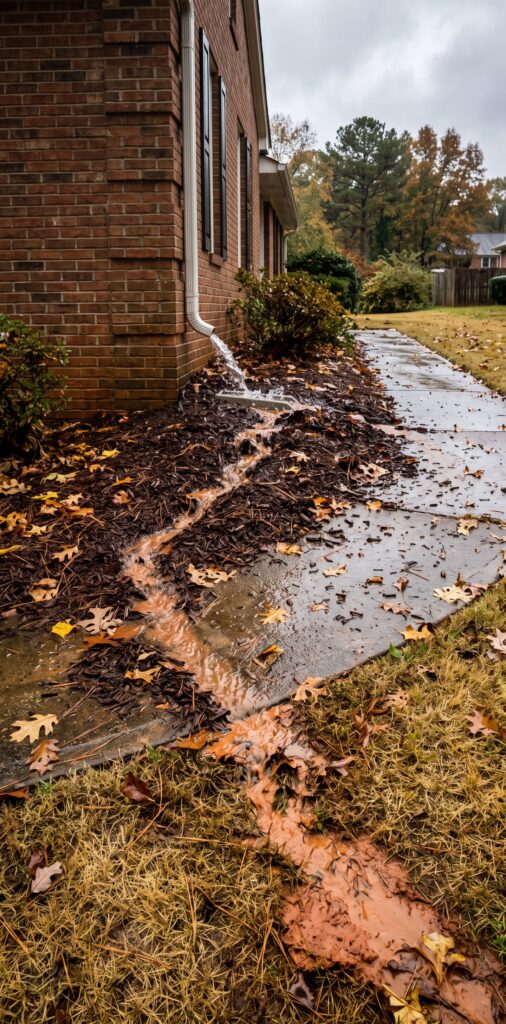
A drainage problem is not always obvious during dry weather. After a significant storm, however, the path of the water becomes much easier to see.
You may notice:
- Water pooling in the same areas after every rainfall
- Soggy soil that takes several days to dry
- Mulch, soil, or gravel washing out of landscape beds
- Water flowing toward the home instead of away from it
- Erosion along slopes, driveways, or walkways
- Downspouts creating puddles near the foundation
- Areas of thinning, yellowing, or dying grass
- Water collecting around patios and other outdoor living spaces
These visible symptoms help identify where water is coming from, where it is collecting, and what may be preventing it from draining properly. Fall storms can provide valuable information that is harder to gather during a long stretch of dry weather.
Upstate South Carolina’s clay-heavy soils can add another challenge. Clay tends to absorb water slowly, which means a solution based only on adding soil, plants, or gravel may not correct the underlying problem.
Why Fall Is an Ideal Time for Drainage Work
From clearer signs of where water is collecting to cooler conditions for completing the work, fall offers several advantages for diagnosing and correcting yard drainage problems.
Hurricane Season Exposes Weak Points
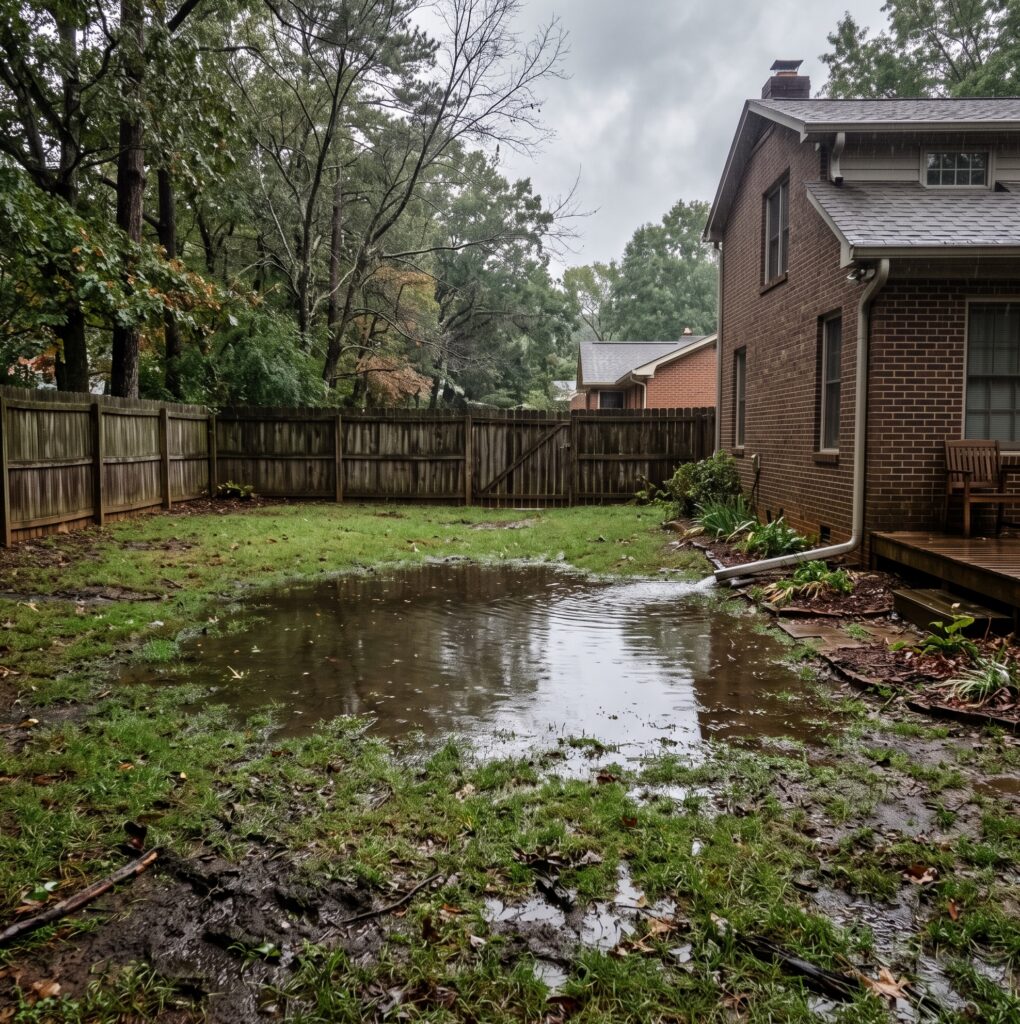
In Greenville and across Upstate South Carolina, late-summer and fall storms can bring intense rainfall within a short period. These storms test the property’s grading, soil conditions, downspouts, drainage systems, and ability to manage runoff.
If your yard repeatedly floods or stays saturated after heavy rain, the problem is unlikely to correct itself. Addressing it while the trouble spots are still visible makes it easier to develop a solution based on how water actually moves across the property.
Your Landscape Has Time to Recover
Many drainage projects require some level of disruption. Installing a French drain, correcting a grade, extending downspouts, or creating a drainage channel may involve removing and replacing sections of lawn or landscape material.
Completing the work in fall gives disturbed areas time to settle and recover before spring growth begins. Cool-season lawns may also benefit from fall restoration, while other areas can be stabilized with mulch, stone, erosion-control materials, or a plan for spring planting.
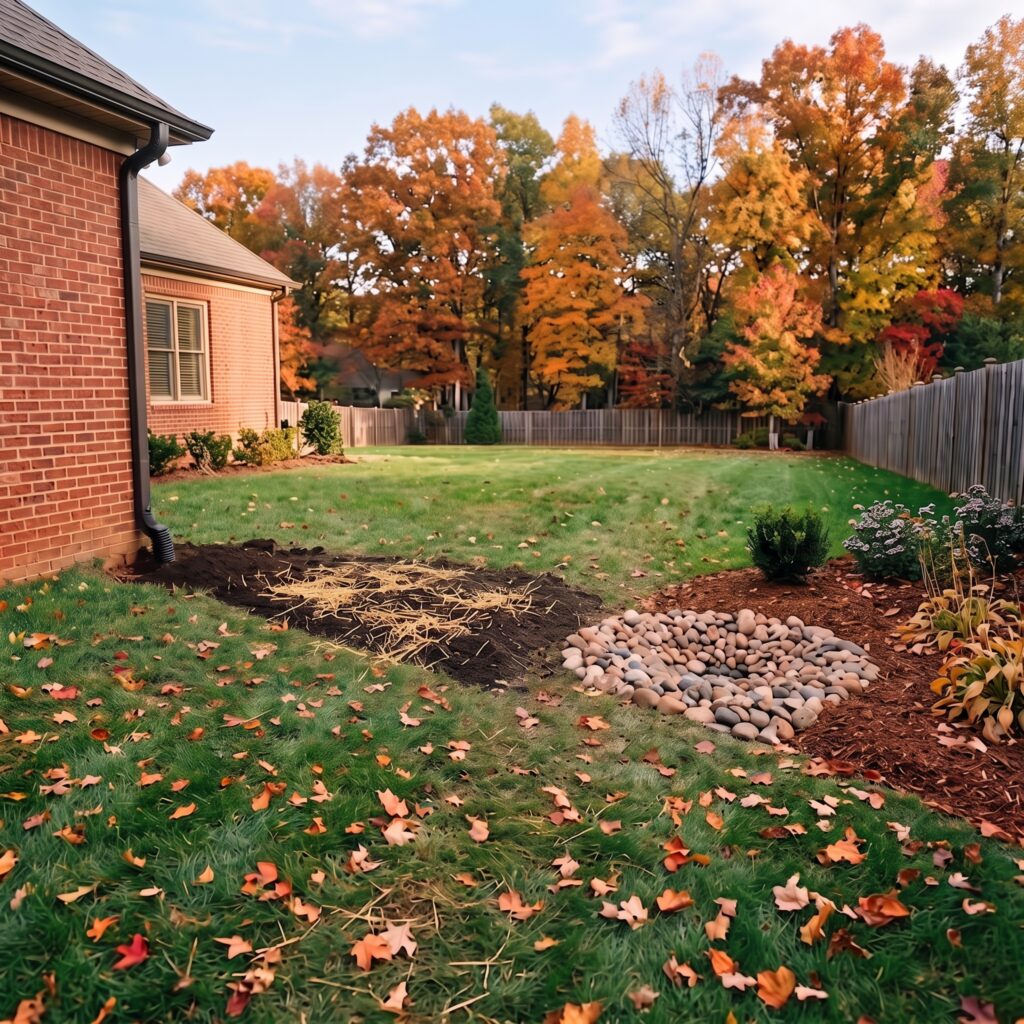
Get Ahead of Winter Slush and Spring Rain
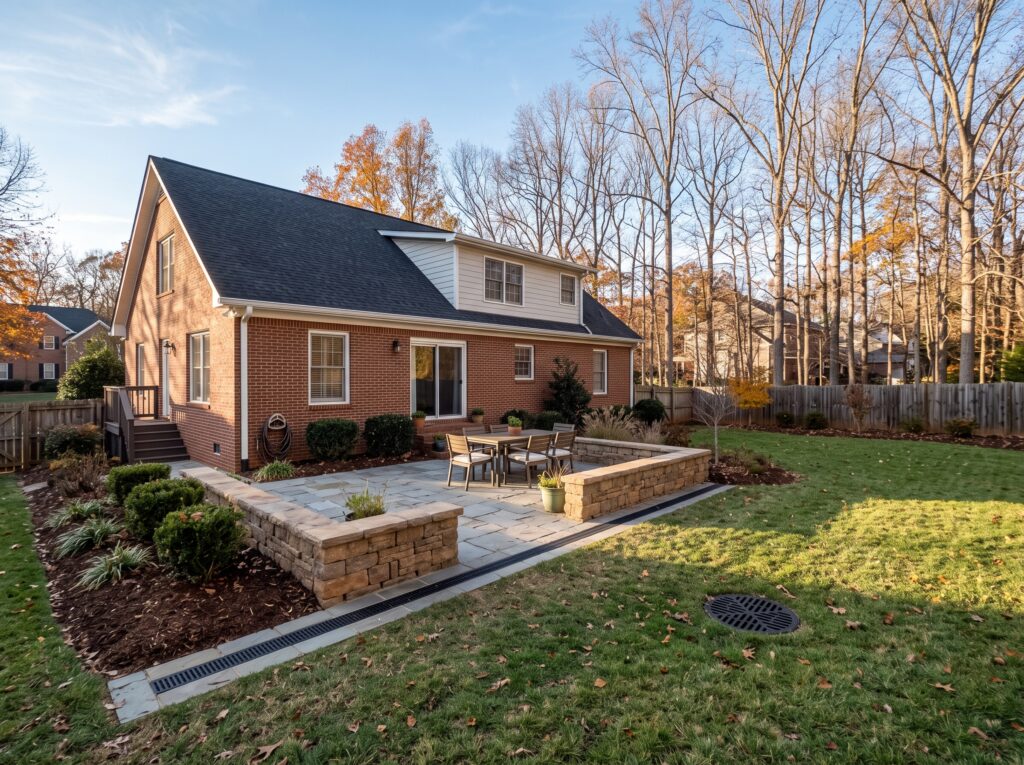
Waiting until water is already causing significant damage can turn a manageable drainage correction into a larger repair. Fall drainage work helps prepare the property before repeated winter rain and spring storms place additional pressure on the landscape.
It also gives you time to correct drainage before beginning other improvements, such as a new patio, outdoor kitchen, planting plan, retaining wall, or lawn renovation.
Why Standing Water Should Never Be Ignored
Poor drainage affects more than the appearance of your yard. When water continually collects in the wrong places, it can create problems throughout the landscape.
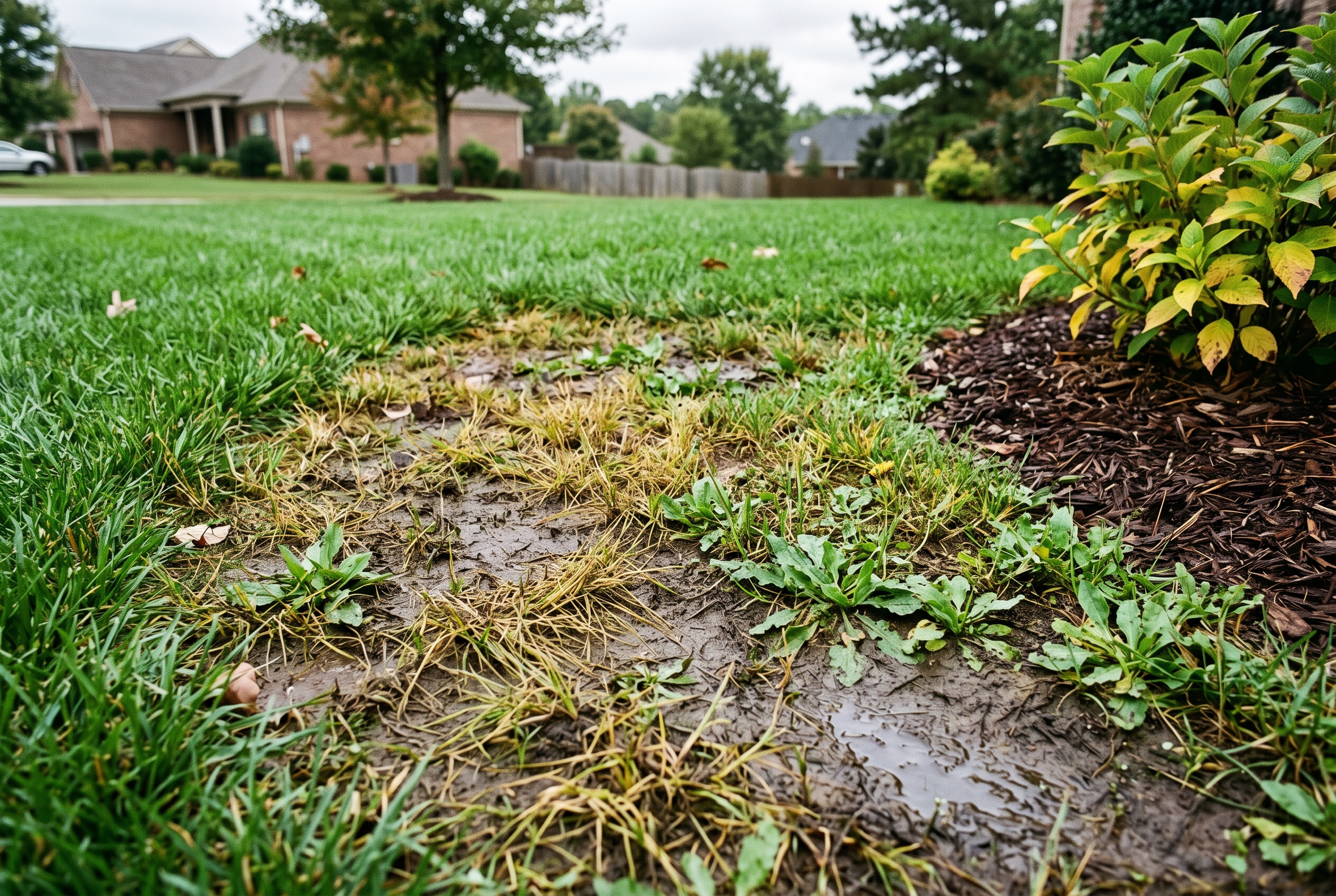
Lawn & Plant Damage
Most turfgrass and landscape plants need oxygen around their roots. When soil remains saturated, roots can become stressed and more susceptible to decline, disease, and rot. Persistent moisture can also encourage weeds and make it difficult to maintain healthy grass in affected areas.
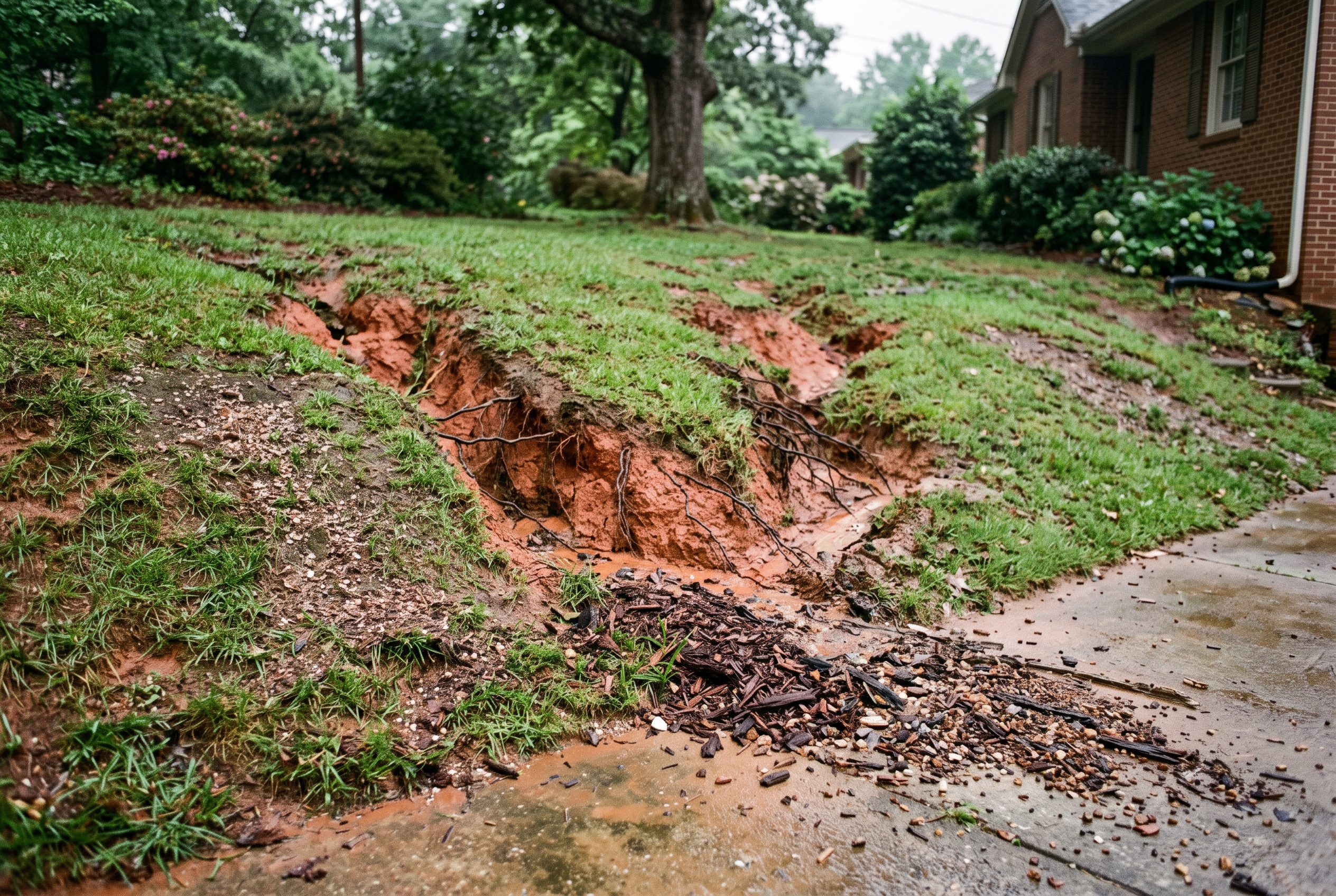
Soil Erosion
Fast-moving runoff can carry away topsoil, mulch, seed, and small aggregate. Over time, this may create bare areas, channels, exposed roots, or unstable slopes.
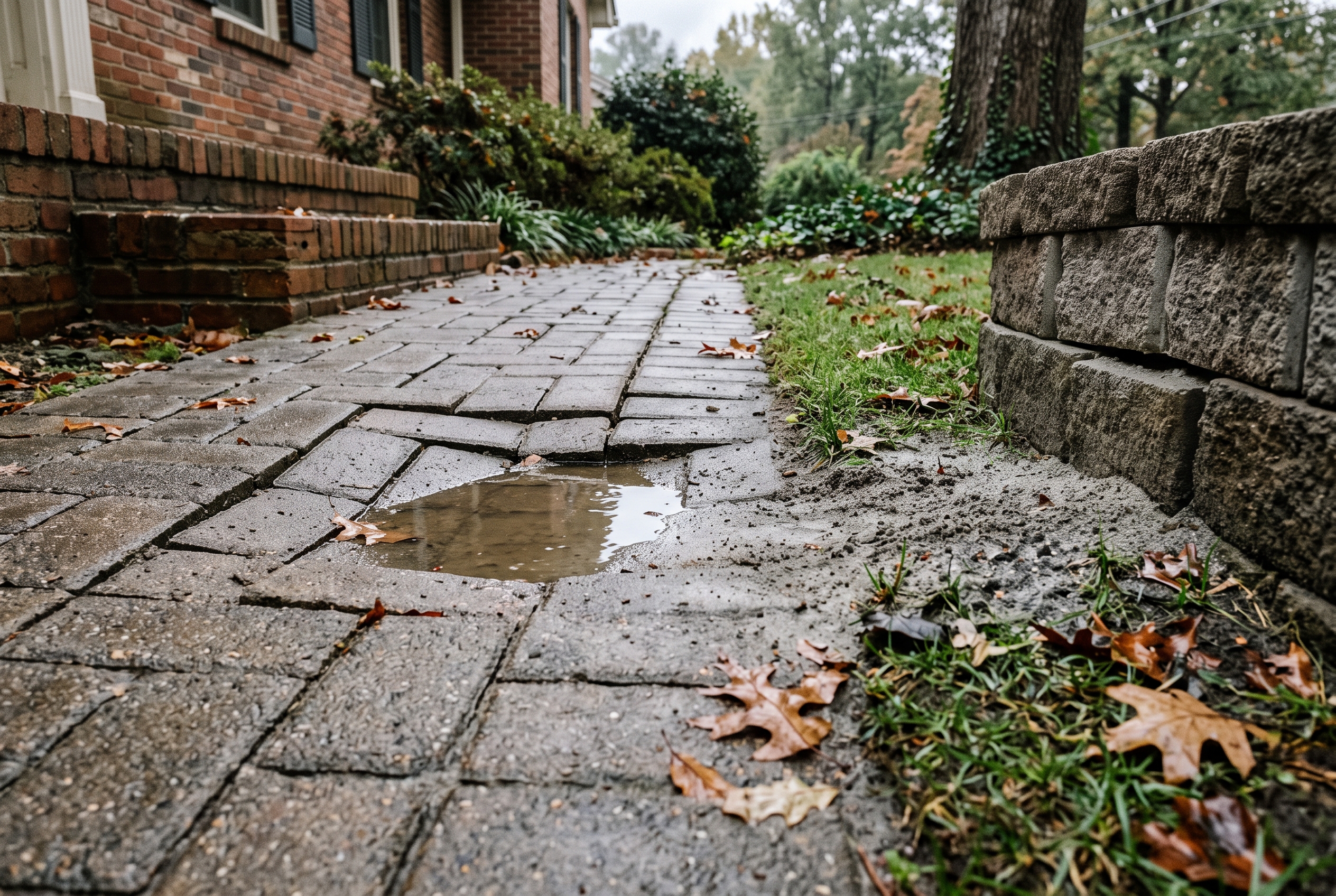
Hardscape Problems
Water that repeatedly flows beneath or around patios, walkways, driveways, and retaining walls can contribute to settling, shifting, and erosion. Correct drainage should be considered before installing new hardscapes—not after problems begin to appear.
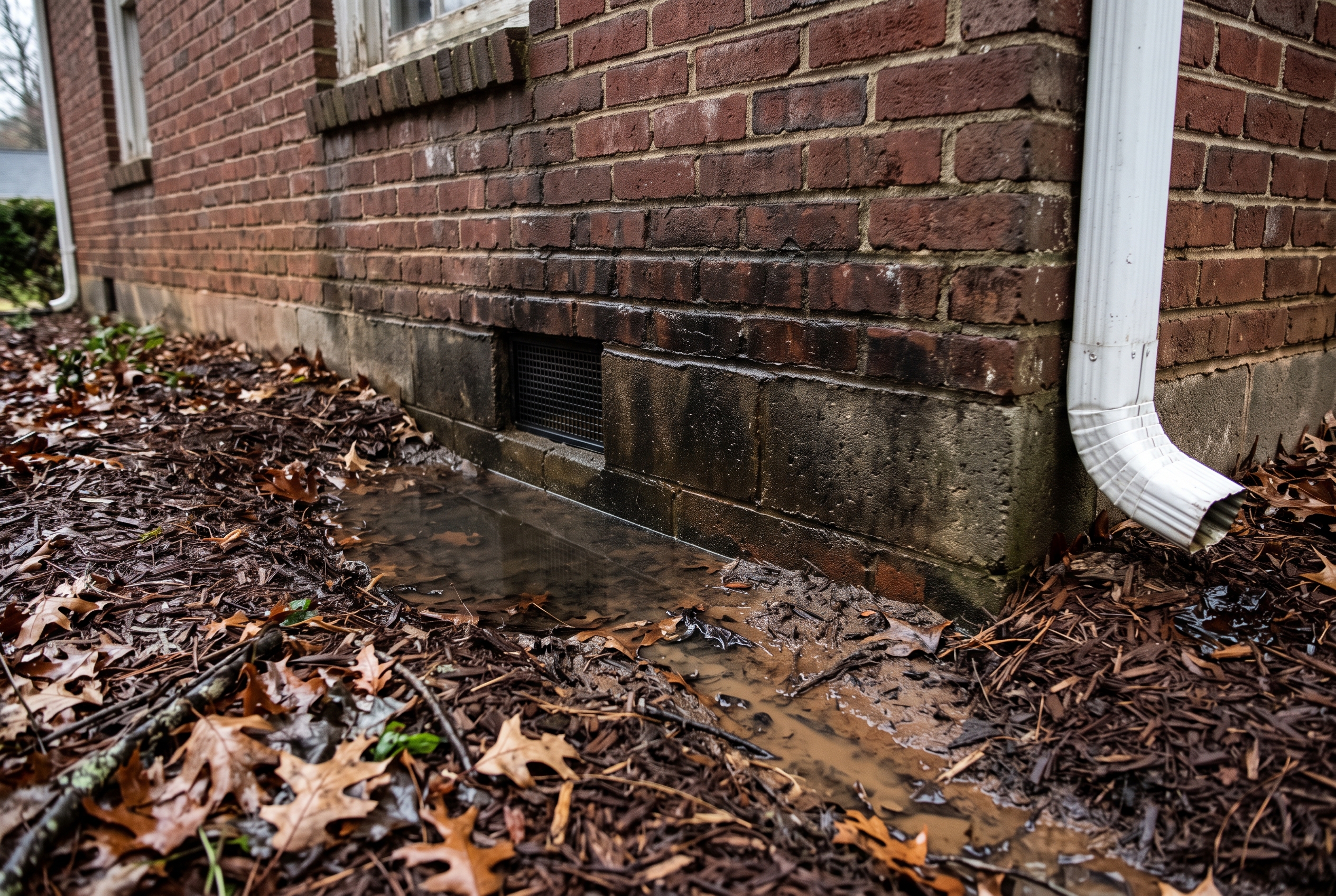
Foundation & Crawl Space Concerns
Water collecting near the home may increase moisture around the foundation or crawl space. While landscaping contractors do not replace waterproofing or structural specialists, proper grading and exterior water management can be important parts of directing runoff away from the house.
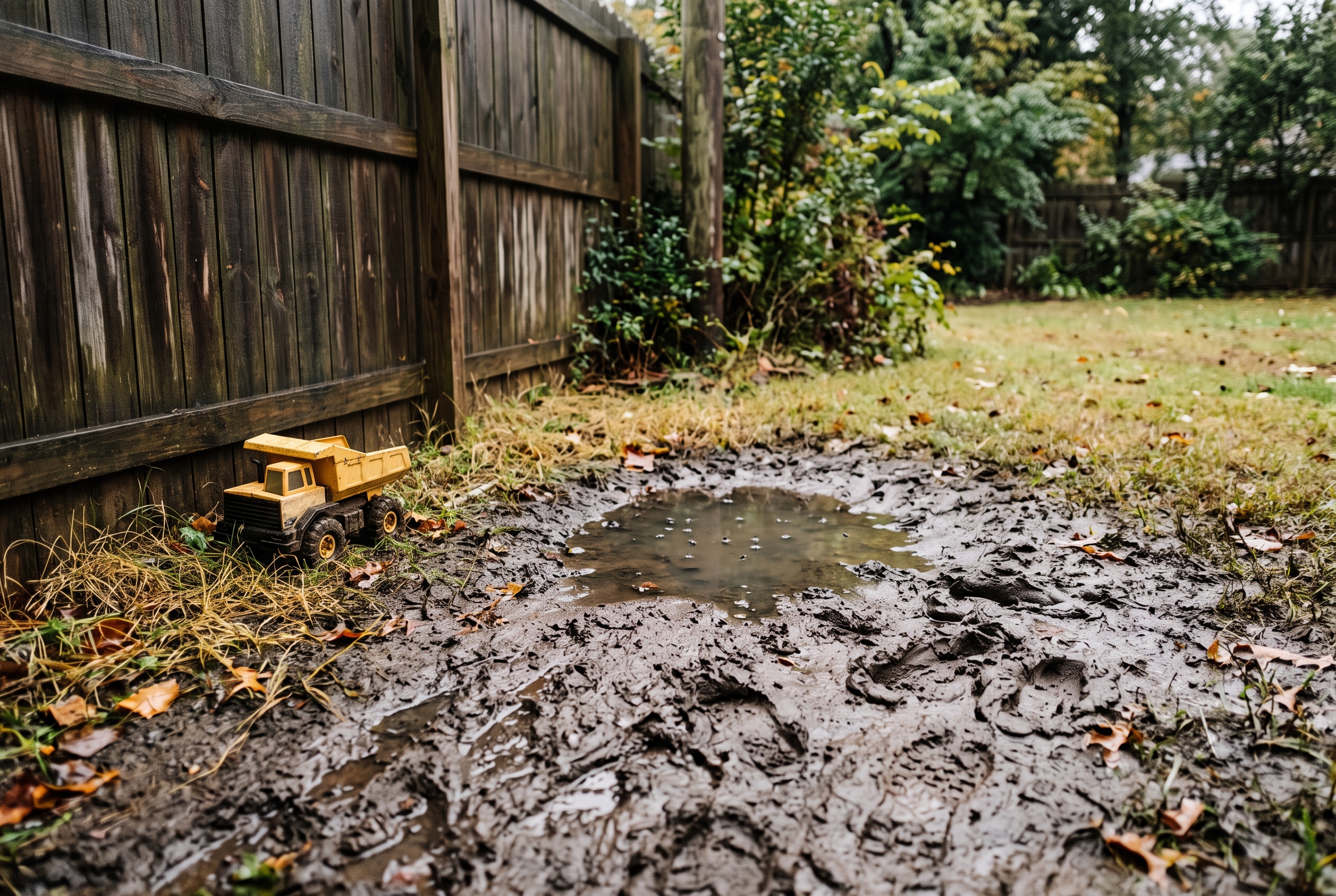
Pests & Unusable Space
Standing water can create mosquito-breeding areas and leave sections of the yard muddy or unusable. A drainage solution can help reclaim those spaces and make the property more comfortable after wet weather.
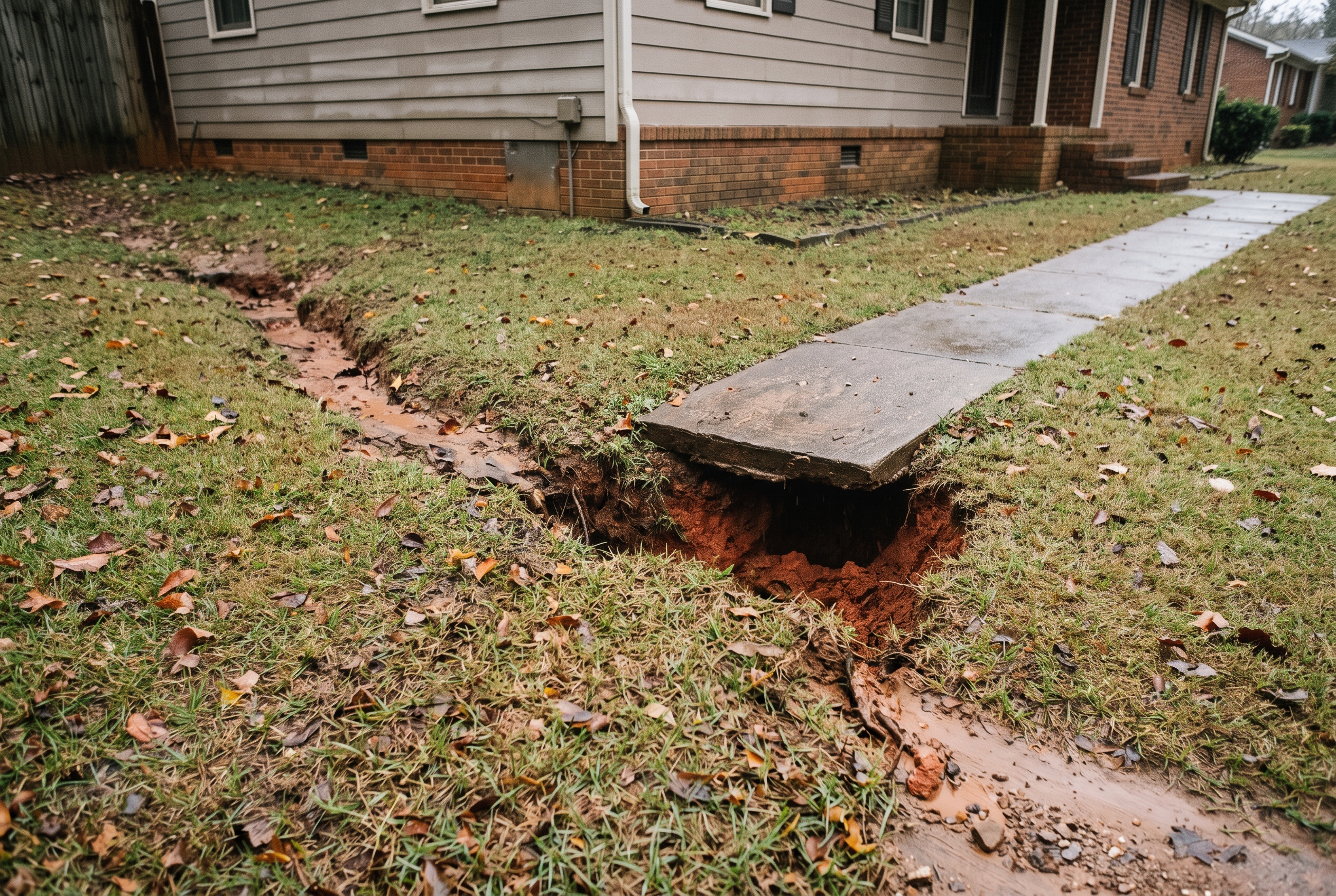
Small Problems Become Bigger
Drainage problems tend to worsen with every major storm. A small washout or low spot can gradually expand, affecting larger sections of the yard and eventually requiring more extensive grading, landscape restoration, or hardscape repairs. Addressing the problem early is usually simpler and less expensive than repairing years of water damage.
Choosing the Right Yard Drainage Solution
There is no single solution for every wet yard. The right approach depends on where the water originates, how it moves across the property, the slope and soil conditions, and where the runoff can be safely directed. That is why a professional evaluation should consider the entire property instead of treating only the most visible puddle.
In many cases, the best drainage plan combines multiple solutions to collect, redirect, and manage water effectively. Depending on the property, these may include:
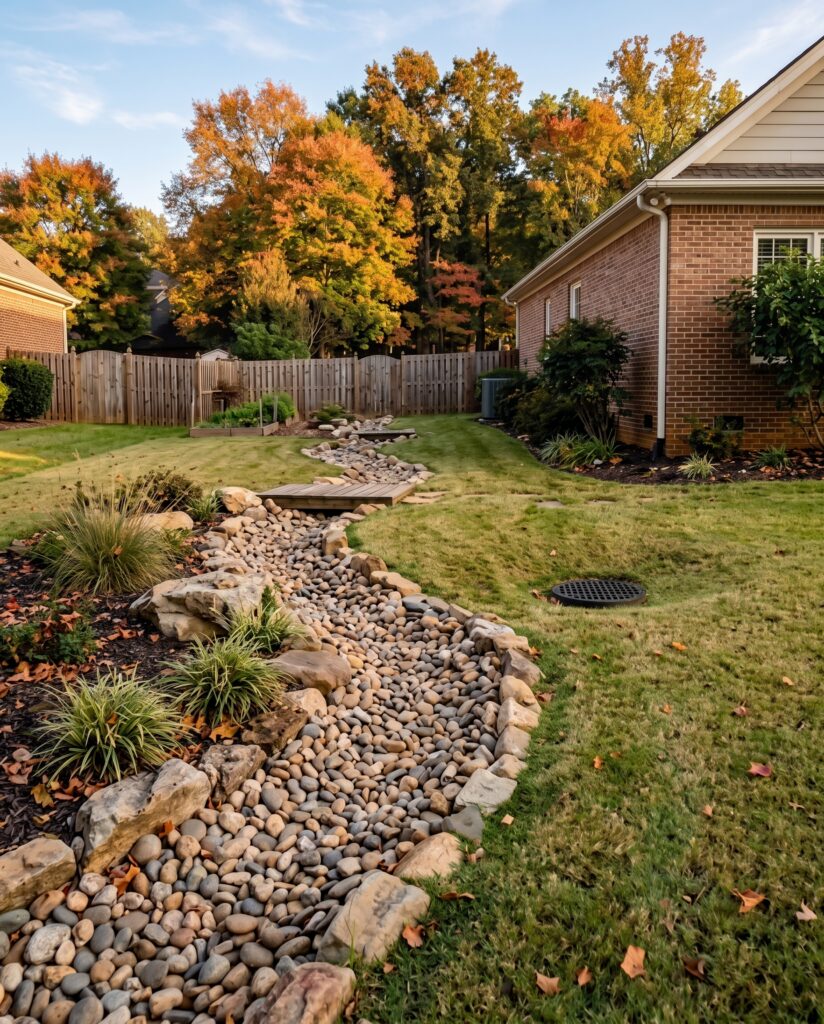
- Grading and swales to guide surface water away from the home and other vulnerable areas
- French drains to collect and redirect water moving through saturated soil
- Catch basins and underground drainage pipes to remove water from low spots
- Downspout extensions to carry roof runoff farther away from the foundation
- Dry creek beds to create an attractive, defined path for stormwater
- Erosion-control improvements to slow runoff and stabilize slopes or exposed soil
The goal is not simply to make standing water disappear. It is to understand why the water is collecting and create a long-term solution that works with the property as a whole.

Schedule a Drainage Consultation with Palmetto’s Finest
If standing water, erosion, or soggy soil appears after every storm, now is the time to address it. Palmetto’s Finest provides stormwater and yard drainage solutions for homeowners throughout Greenville and Upstate South Carolina.
Our team evaluates the full property and recommends solutions based on its grading, soil conditions, runoff patterns, and long-term landscape plans.
Stop treating the puddle and start solving the problem. Contact Palmetto’s Finest to request a drainage consultation.