
Landscaping & Drainage in Greenville, SC
Design-build landscaping, drainage and outdoor living for homes inside the City of Greenville — built for older lots, mature trees and tight access. We start with where the water goes, then build the yard around it.
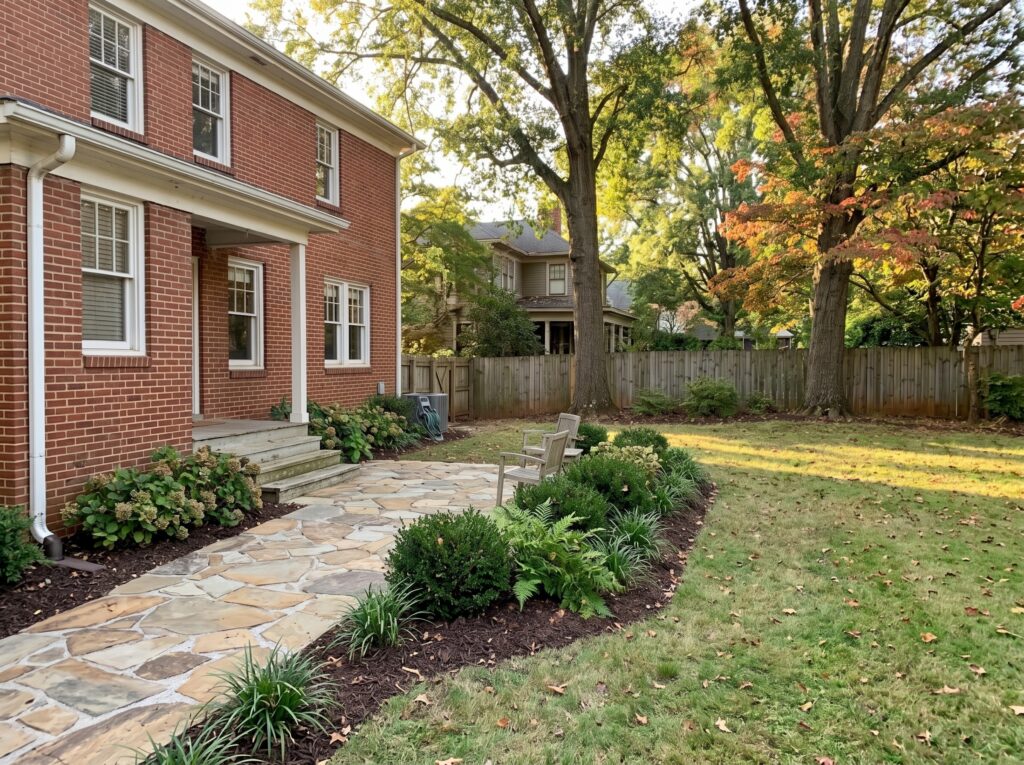
Built for established lots
Mature trees, older drainage and finished surroundings.
Drainage-first design
Every plan starts with grade and water routing.
Design through build
One contractor from first sketch to final walkthrough.
Licensed & insured
Full-service contractor working under written scope.
A landscaping and drainage contractor for Greenville, SC homes
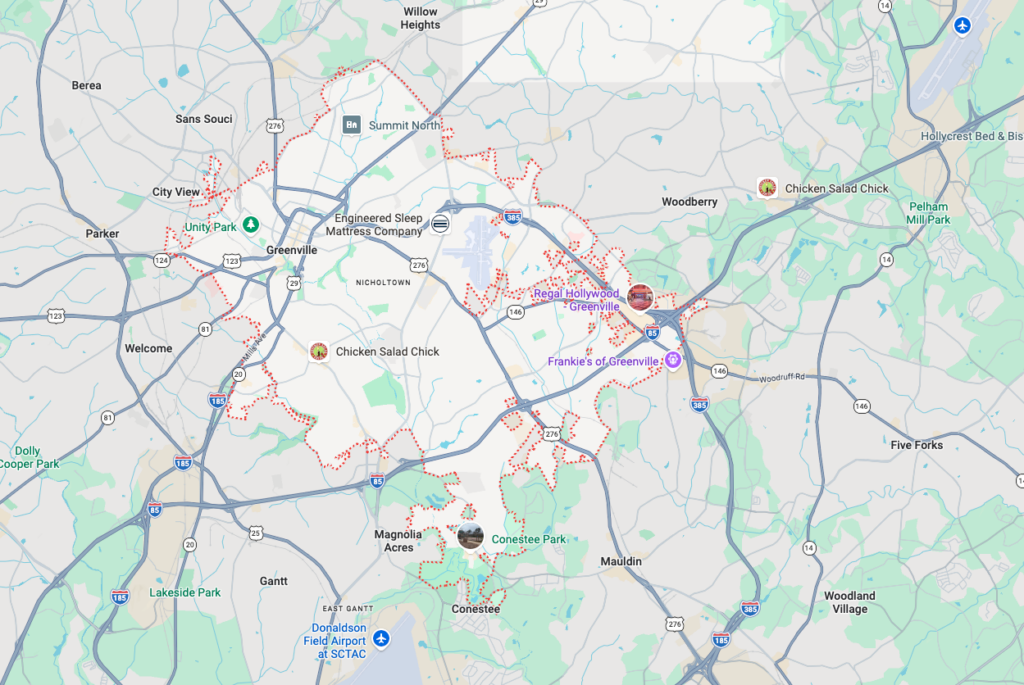
Palmetto’s Finest is a design-build landscape contractor serving homeowners inside the City of Greenville, South Carolina — North Main, Augusta Road, Overbrook, Parkins Mill and the other established neighborhoods in the 29601, 29605, 29607 and 29609 ZIP codes. We’re based in Powdersville, about eight miles from downtown, and Greenville is the center of the area we work in.
In-town Greenville yards have different problems than a new subdivision. The lots were graded decades ago. Mature oaks and maples own the root zone. Driveways, additions and patios have been added a piece at a time, and the drainage is often whatever an old buried line or a downspout was doing when the house was built. Then the house next door is torn down and rebuilt bigger, and water that used to soak into their yard starts showing up in yours. That’s why so much of our work in Greenville starts with the water before anything else gets built.
We handle the full scope: a site walk and design, then the build itself — drainage and grading, retaining walls, stone and hardscape, patios and outdoor kitchens, planting, irrigation and lighting — plus ongoing maintenance once it’s in. One contract, one contractor, from the first sketch to the final walkthrough.
What we build for Greenville homeowners
Six services cover most of what we’re called out for inside the city. They’re often combined — a patio that finally fixes a wet side yard, or a stone wall that makes a sloped back lot usable without disturbing the trees around it.
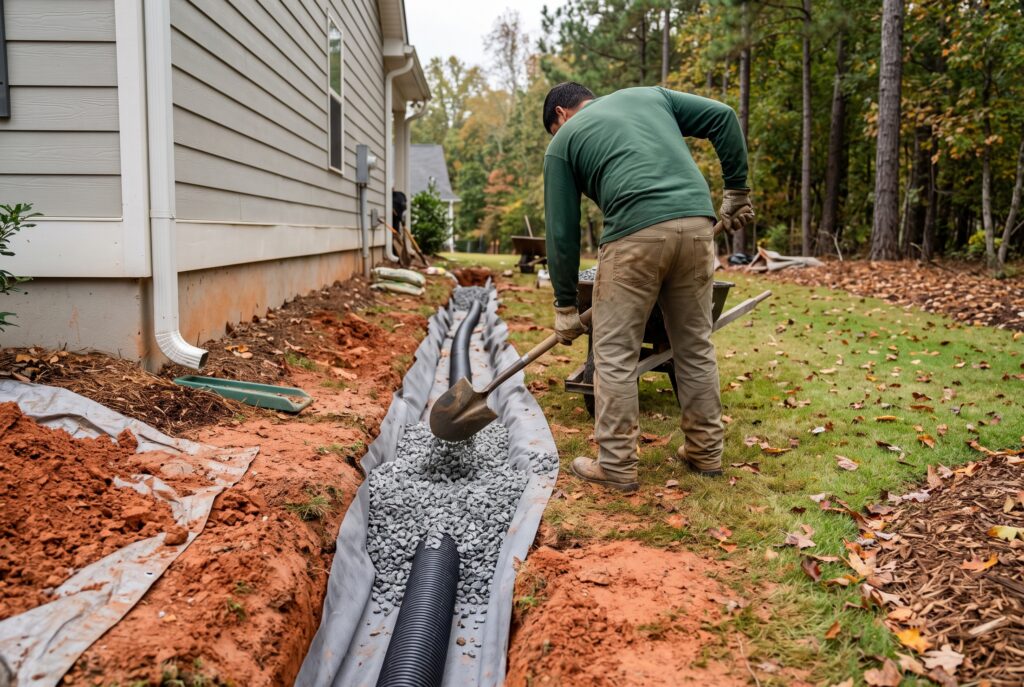
Stormwater & drainage solutions
Regrading, French drains, catch basins, downspout tie-ins and dry creek beds — including replacing failed older drain lines and capturing water coming in from a neighboring lot.
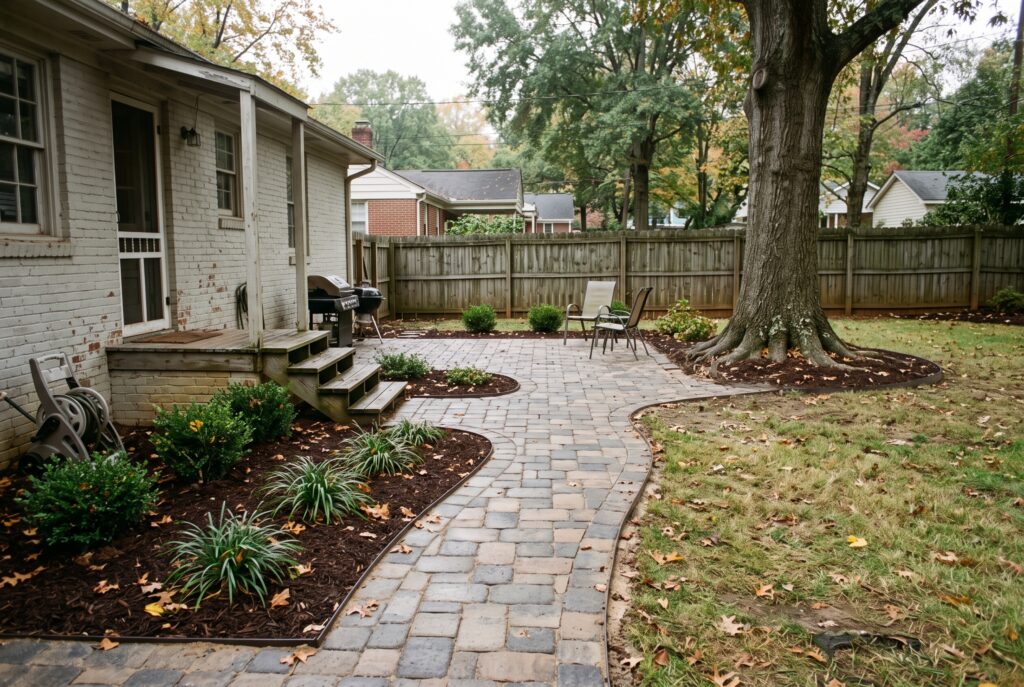
Hardscapes & patios
Patios, walkways and steps sized to the lot you actually have, on a base that accounts for clay subgrade, tree roots and the water moving across them.
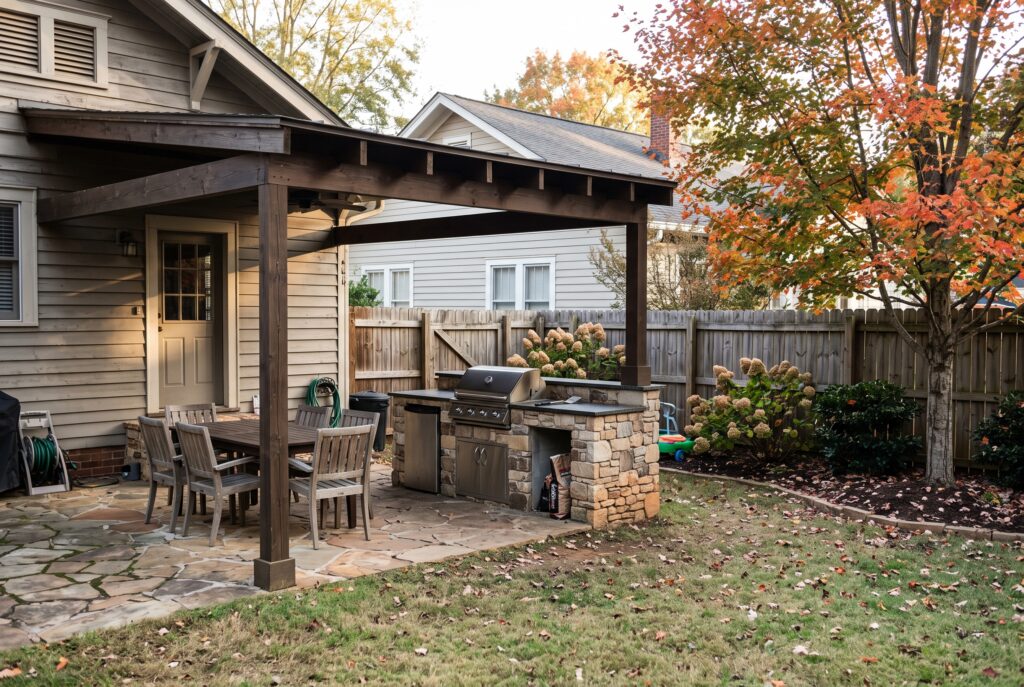
Outdoor living & kitchens
Outdoor kitchens, covered seating and gathering spaces that fit a city lot — planned around setbacks, existing trees and how the space connects to the house.
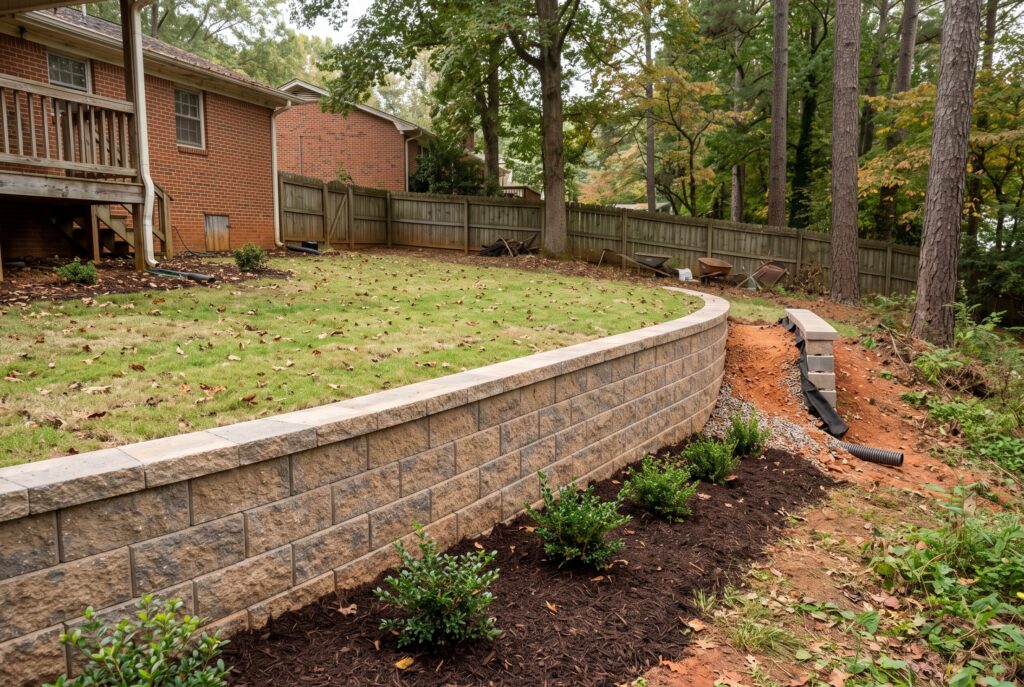
Retaining walls
Walls that hold a grade for good — proper base, drainage stone and a pipe behind them. Many of the leaning walls we replace in older neighborhoods failed because water had nowhere to go.
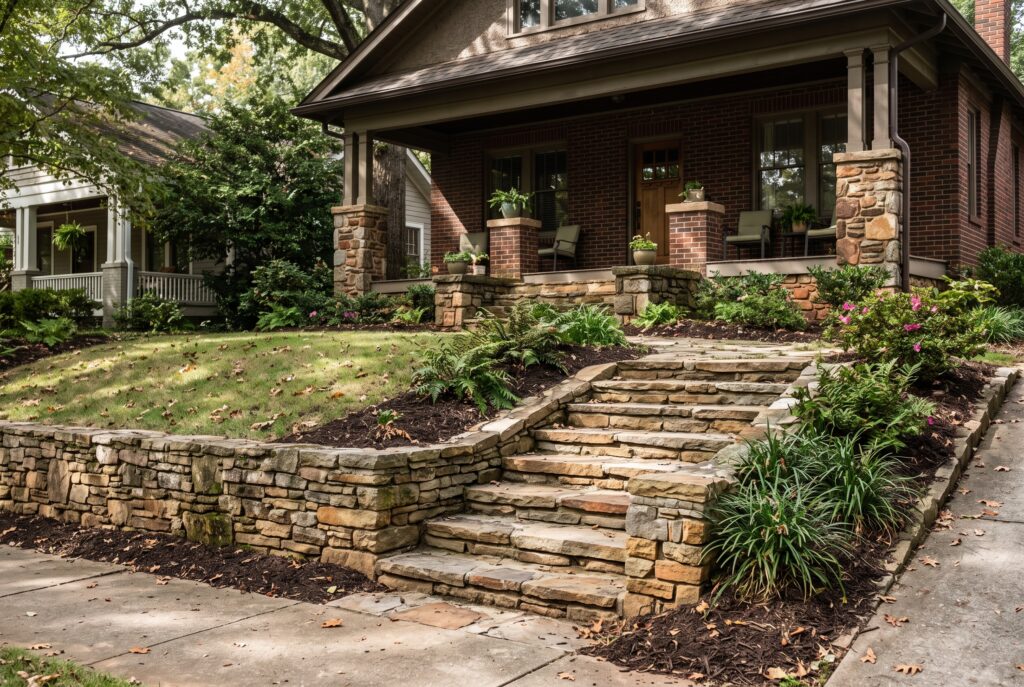
Custom stone & masonry
Stone steps, garden walls, entry features and repairs that suit the age and style of the house, including matching or rebuilding original stonework.
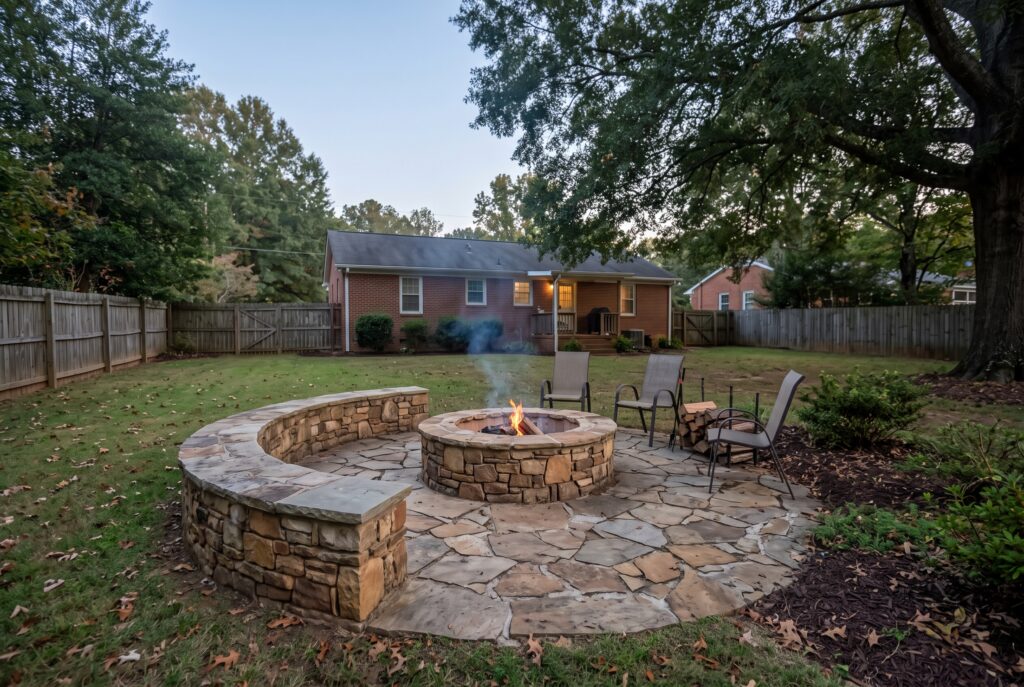
Fire pits & seating walls
Wood-burning or gas fire features with built-in seating, placed for clearance from trees, fences and the house and drained so the patio around them stays dry.
What makes in-town Greenville yards different
The City of Greenville covers about 30 square miles of Piedmont foothills at just under 1,000 feet of elevation, and it counted 70,720 residents in the 2020 census, up from 58,409 in 2010. Unlike the suburbs around it, much of that growth has landed inside neighborhoods that were already built out — new houses on old lots, additions and infill. Landscaping work in town is usually about fixing and fitting, not starting from bare dirt.
Old lots, mature trees, and water with nowhere to go
Under most Greenville yards is the same Piedmont red clay found across the Upstate, and it drains slowly. On an older lot, decades of settling, added paving and grade creep around the foundation make it worse. Original drain lines and downspout connections are often buried, undersized or filled with roots, so water that was supposed to leave the property stays on it. It shows up as a damp crawlspace, a wet strip along the driveway, mulch washing out of beds, a walkway settling at one end, or moss and bare ground under the canopy.
Mature trees make the fix more careful, not impossible. A drain route or a patio base has to be planned around the root zone of the trees you want to keep, which is why we lay out drainage and hardscape together rather than one at a time.
Infill and teardowns change the water next door
When an older house on a street is replaced with a larger one, the new roof and driveway shed more water, and the new lot is often graded higher than the yards beside it. Homeowners downhill feel it first. The answer is usually a combination of regrading, a swale or drain that catches the water at the property line, and a planned route for it to leave by.
Tight access and finished surroundings
Narrow side yards, shared driveways, fences, established beds and neighbors a few feet away all shape how a city project gets built. Equipment access affects method, sequence and cost, so we work it out on the site visit and put it in the written scope, along with what’s being protected.
The Reedy River and Richland Creek
Most of the city drains to the Reedy River, which runs through downtown and Falls Park, by way of tributaries like Richland Creek near Cleveland Park. The Reedy has a long flood history: in July 2004, a stalled storm pushed the river to 19.2 feet downtown and damaged homes in the Berea and Sans Souci areas. A lot that holds its soil and slows its runoff takes a little of that pressure off the creeks downstream.
City of Greenville rules, not Greenville County rules
Inside city limits, permitting and stormwater review run through the City of Greenville, which keeps its own stormwater ordinance and permit categories separate from the county’s. The City also revised its tree ordinance in 2021 to protect large trees, and whether it applies to a particular tree on a residential lot depends on the tree’s size and the property’s history. Most landscape work on an established lot is routine, but larger grading jobs and big tree removals can need City approval. We check which side of that line your project sits on before work is scheduled, not after.
Neighborhoods we work in
We work in established neighborhoods across the city, from the historic districts near downtown to the streets off Augusta Road, North Main and Laurens Road.
North Main
Augusta Road
Alta Vista
Parkins Mill
Gower Estates
Cleveland Forest
Overbrook
Heritage
Hampton-Pinckney
Pettigru
East Park Avenue
Colonel Elias Earle
We also serve the surrounding Upstate, including Greer, Five Forks, Travelers Rest, Powdersville, Taylors, Mauldin and Simpsonville. See all areas we serve.
What working with us looks like
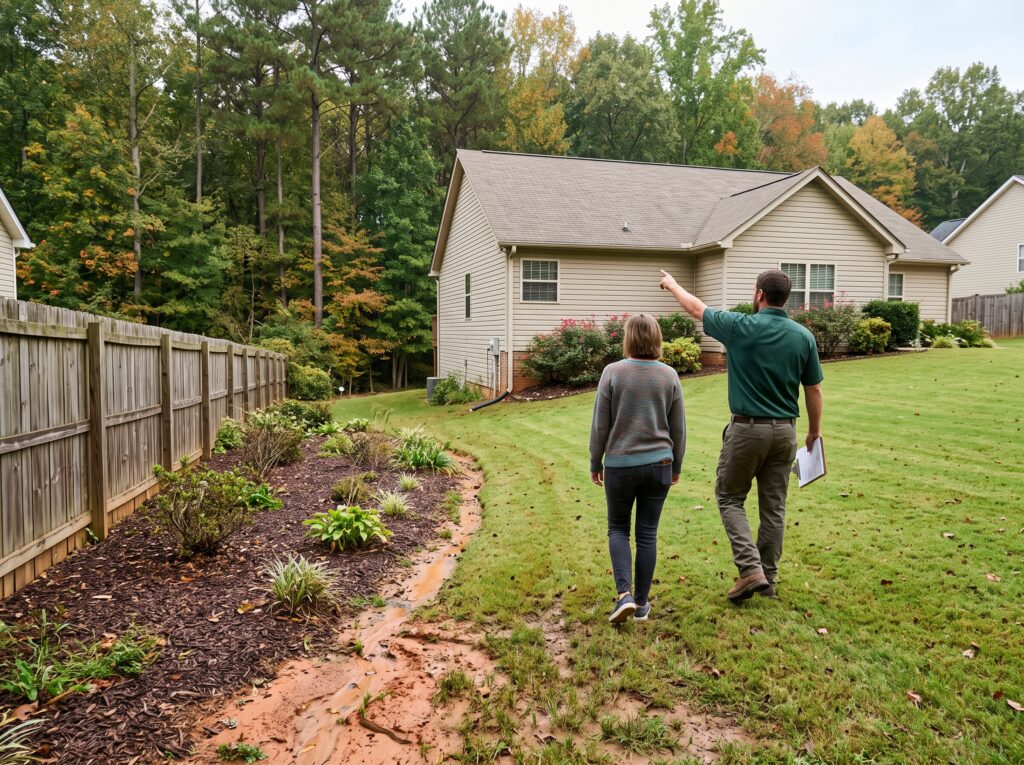
- We walk the whole property, including where the downspouts go and where a neighbor’s water comes in — not just the area you want to change.
- We mark the trees, beds and hardscape you want to keep and plan the work around them.
- You get a plan that shows grades and where water is going, not only a plant list.
- Scope, materials, access and sequence are in writing before anything gets dug.
- The contractor who drew the plan is the one who builds it.
- Work can be phased across seasons if the full scope isn’t happening at once.
- A final walkthrough covers what was installed and how to care for it.
How a Greenville project runs
01 — On-site consultation
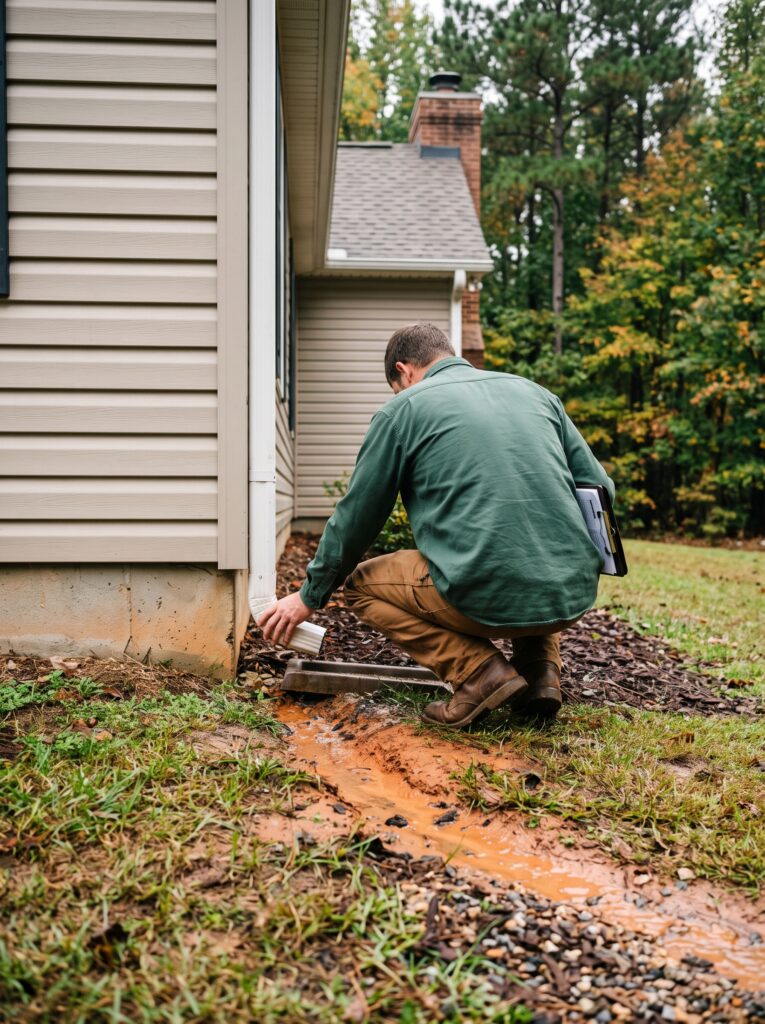
We walk the property with you, find where the water comes from and where it’s headed, note access and what’s staying, and talk through what you want the space to do.
02 — Design and proposal
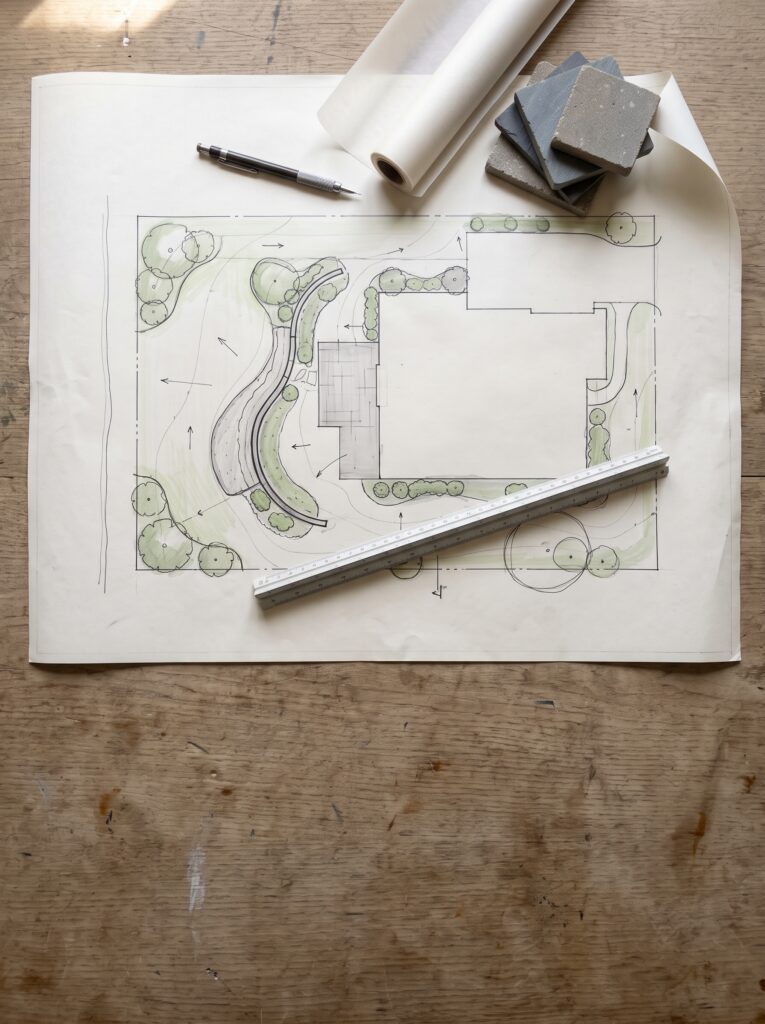
You get a drawn plan and a written scope covering grading, drainage, hardscape and planting, any City approvals the work needs, and phasing options if the whole project isn’t happening at once.
03 — Build and handoff
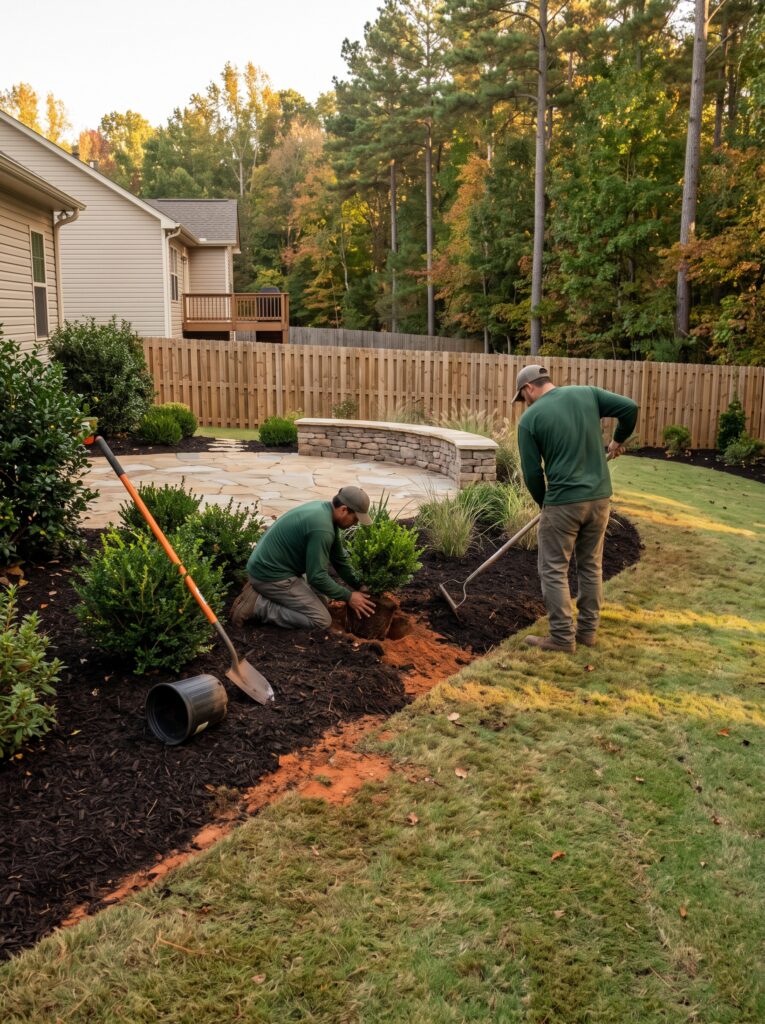
Water work goes in first, then hardscape, then planting and finish grading. We close with a walkthrough covering care for everything installed.
Fall and winter are the right time to fix drainage
Grading and drainage work is easier on a dormant lawn, leaves are down so you can see the whole lot, and getting it done now means spring storms hit a yard that’s ready for them. Book a site visit for your Greenville property.
Greenville landscaping questions, answered
Does Palmetto’s Finest work inside Greenville city limits?
Yes. Palmetto’s Finest serves homeowners throughout the City of Greenville, including the 29601, 29605, 29607 and 29609 ZIP codes and neighborhoods such as North Main, Augusta Road, Overbrook and Parkins Mill. We’re based in Powdersville, about eight miles from downtown, and also work across the rest of Greenville County and the surrounding Upstate.
Why does water collect in my yard in an older Greenville neighborhood?
Usually because of clay, age and changes around the lot rather than rainfall alone. Piedmont red clay drains slowly, older drain lines and downspout connections are often clogged or undersized, and decades of added paving and nearby infill send more water toward the same low spots. The fix is almost always a combination of regrading, a working route for the water to leave by, and capturing water at the property line where it comes in from next door.
Do I need a permit for drainage or grading work in the City of Greenville?
Sometimes. Inside city limits, permitting and stormwater review run through the City of Greenville rather than Greenville County. Routine landscape work on an established lot is typically straightforward, while larger grading and land-disturbing projects can require a City stormwater permit. We identify what applies to your project during design and tell you before work begins.
Can a large tree be removed for a patio or drainage project?
It depends on the tree and the property. The City of Greenville revised its tree ordinance in 2021 to protect large trees, and whether it applies to a tree on a residential lot depends on the tree’s size and the property’s history. Before recommending a removal, we check the requirements and look at whether the design can work around the tree instead, which is often possible.
Can you work on a small lot with tight access?
Yes. Narrow side yards, shared driveways, fences and established beds are normal for in-town Greenville projects. Access affects the method, sequence and cost of the work, so we plan it during the site visit and write it into the scope, along with how finished surfaces and plantings you’re keeping will be protected.
How much does a landscaping project cost in Greenville?
Cost is driven by a handful of things: how much earth has to move, whether drainage or retaining structures are involved, access for equipment to the work area, hardscape material and square footage, and how much planting and irrigation is included. A drainage correction on a single problem area and a full backyard build are different orders of magnitude, so we price from an actual site visit and a drawn scope instead of a per-square-foot guess.
When is the best time of year to start a project in Greenville?
Fall through early spring is the strongest window. Grading and drainage go easier on a dormant lawn, hardscape isn’t fighting summer heat, and trees and shrubs planted in cooler months root in before their first Upstate summer. Work happens year-round, but scheduling a site visit in the fall usually means the yard is ready before spring storms arrive.
Do you offer ongoing landscape maintenance?
Yes. Alongside design-build work we offer ongoing landscape maintenance for Greenville properties, residential and commercial. Plenty of clients start with a build and keep us on afterward to look after what we installed, and we also take on maintenance for properties we didn’t build. Tell us what the property needs and we’ll scope it during the site visit.
Request an estimate for your Greenville property
Tell us what the yard is doing — where it stays wet, what you want to build, what’s failing. We’ll walk the property and put a plan and a scope in front of you.