
Stormwater & Drainage
Stormwater & Drainage Solutions in Greenville, SC
Palmetto’s Finest is a licensed, insured design-build landscape contractor that fixes yard drainage problems across Greenville and the Upstate — standing water, soggy lawns, water against the foundation and erosion. We find where the water is coming from, then build the fix that sends it somewhere safe.
Licensed & insured
Full-service landscape contractor.
Drainage-first
The water plan comes before anything else.
We fix the cause
We trace water to its source, not just where it sits.
Serving the Upstate
Greenville, Anderson, Pickens and Oconee counties.
Yard drainage problems, solved at the source
Most drainage problems in Greenville aren’t caused by too much rain. They’re caused by where the rain goes after it lands. A downspout that empties at the foundation, a lot graded so it tips toward the house, a low corner with no way out, a layer of compacted clay that water can’t soak through — any one of them turns a normal Upstate thunderstorm into standing water, a wet crawl space or a washed-out bed.
Our stormwater & drainage solutions start with a site walk where we follow the water across your property: where it enters, where it collects and where it can safely and legally leave. Then we design the fix — regrading, French drains, catch basins, buried downspout lines, swales or dry creek beds — and our own crew builds it. As a full-service contractor, we also put back the lawn, beds or patio edges we disturb along the way, so you’re not hiring someone else to finish the job.
Signs your yard has a drainage problem
If any of these sound familiar, water is moving across your property in a way it shouldn’t. Almost all of them have a fixable cause.
Standing water hours after rain
A lawn that stays soggy for days
Water pooling against the foundation
A damp or wet crawl space
Downspouts dumping at the house
Mulch and soil washing out of beds
Erosion cutting down a slope
Moss and bare spots in a sunny lawn
A patio or walkway that’s settling
Water sheeting across the driveway
Runoff coming from a neighbor’s yard
An old French drain that stopped working
Not sure what you’re looking at? Take a few photos or a short video during the next heavy rain. It tells us more than a dry-day visit can.
Surface water and groundwater need different fixes
Every drainage problem is one of two kinds, or both. Telling them apart is the first thing we do, because the right fix for the wrong problem is how homeowners end up paying twice.
Surface water
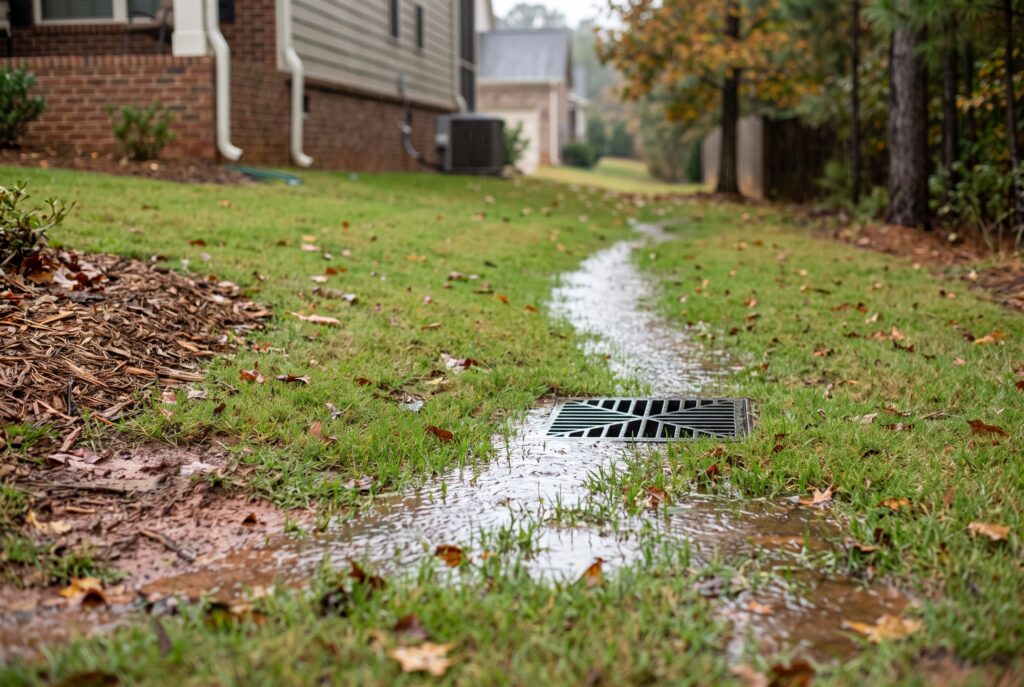
Rain and roof runoff moving across the ground faster than it can soak in. It shows up as puddles, sheet flow, washouts and water running toward the house. The fix is controlling the grade and giving the water a path: regrading, swales, catch basins and buried downspout lines.
Subsurface water
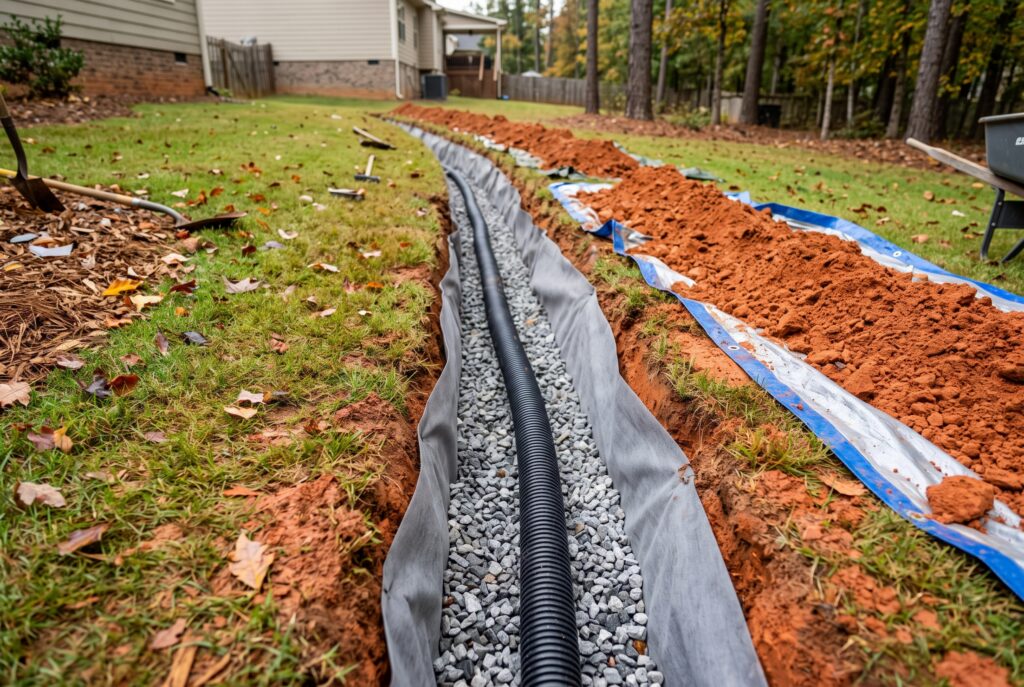
Water that soaks in, hits dense clay and moves sideways underground. It shows up as ground that stays soft days after a storm, seepage at the bottom of a slope or a damp crawl space. The fix is collecting it below grade with a French drain or curtain drain and carrying it to a proper outlet.
Drainage solutions we design and install
Most properties need two or three of these working together. We size each one to the water it actually has to carry.
French drains & curtain drains
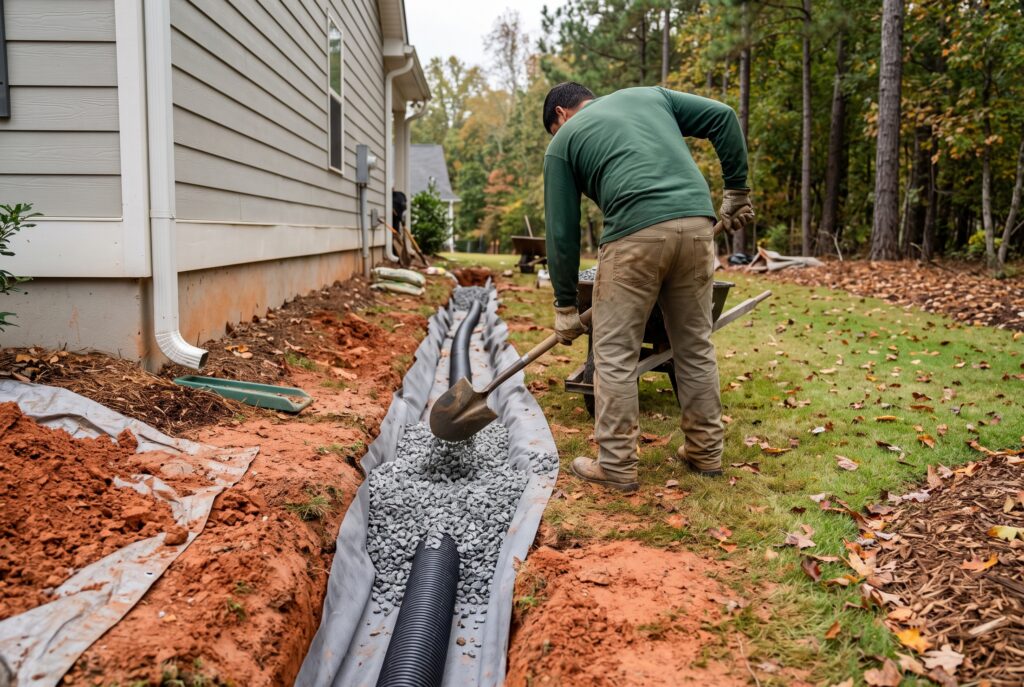
A gravel trench with perforated pipe, wrapped in filter fabric and set on a steady fall to an outlet. It collects groundwater and saturated soil before it reaches the house or the low spot in the yard.
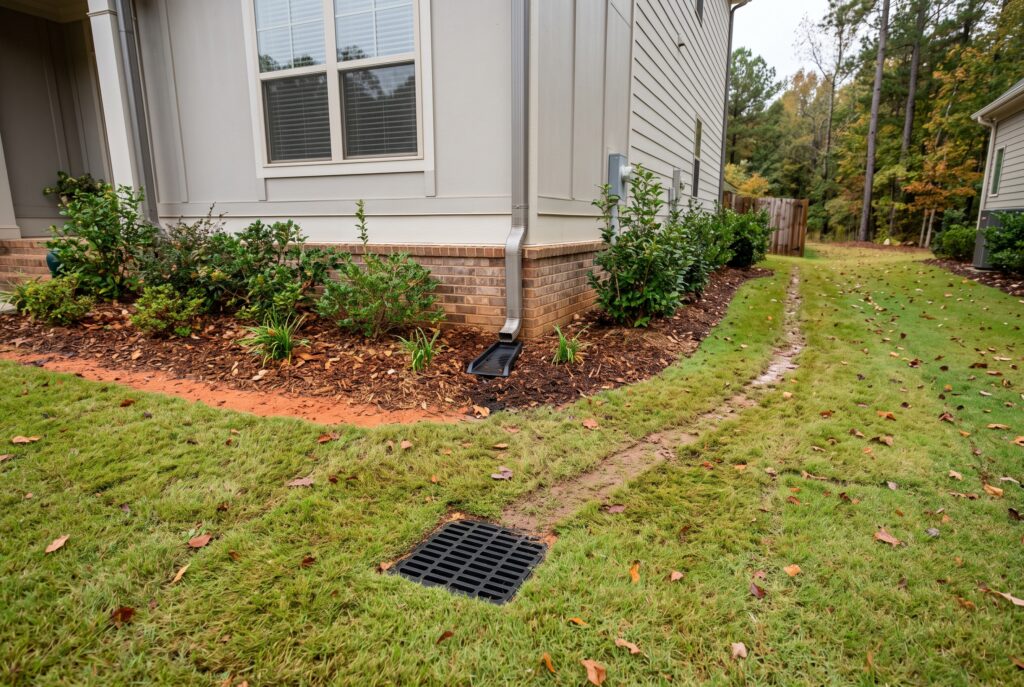
Catch basins & buried downspout lines
We collect roof water at the downspout and surface water at the low point, carry it underground in solid pipe and release it at a safe outlet well away from the foundation.
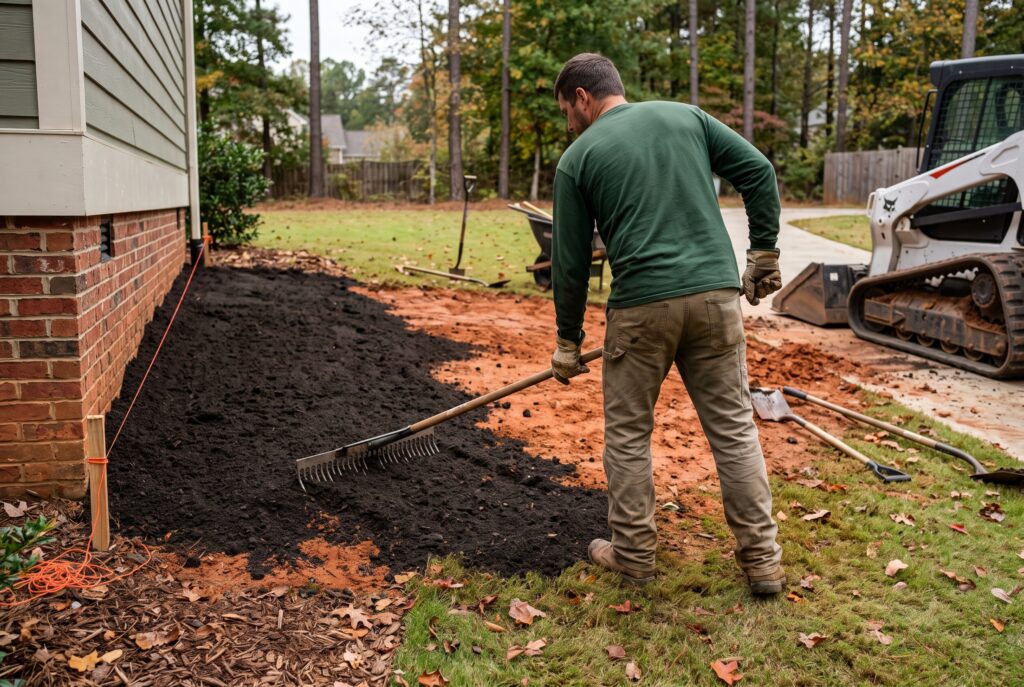
Grading & regrading
The most overlooked fix. Soil along the foundation should slope away from the house, and the yard needs somewhere for water to go. Correcting the grade often solves what a drain alone can’t.
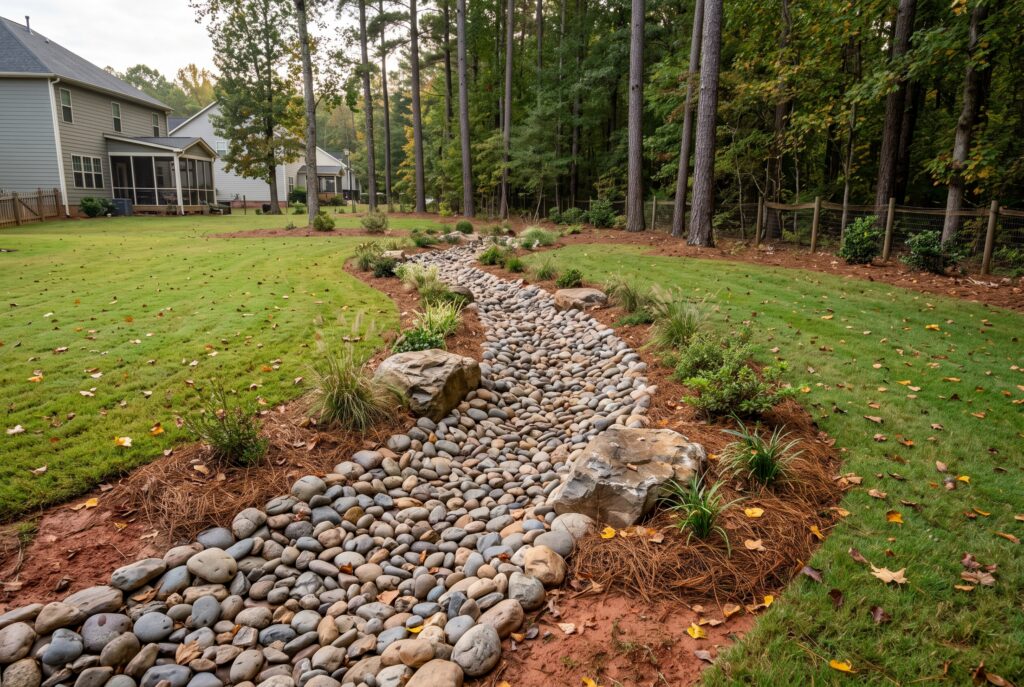
Swales & dry creek beds
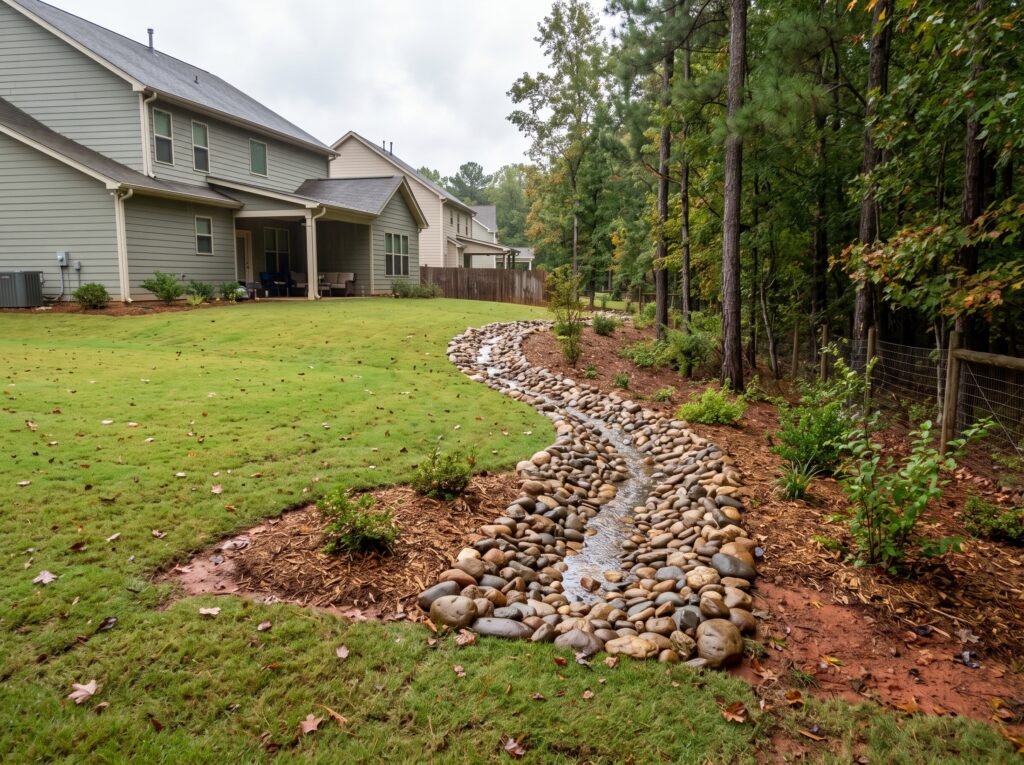
A shallow, shaped channel that moves surface water across the yard on purpose. Lined with river rock and planted at the edges, a dry creek bed handles runoff in a storm and reads as part of the landscape the rest of the time.
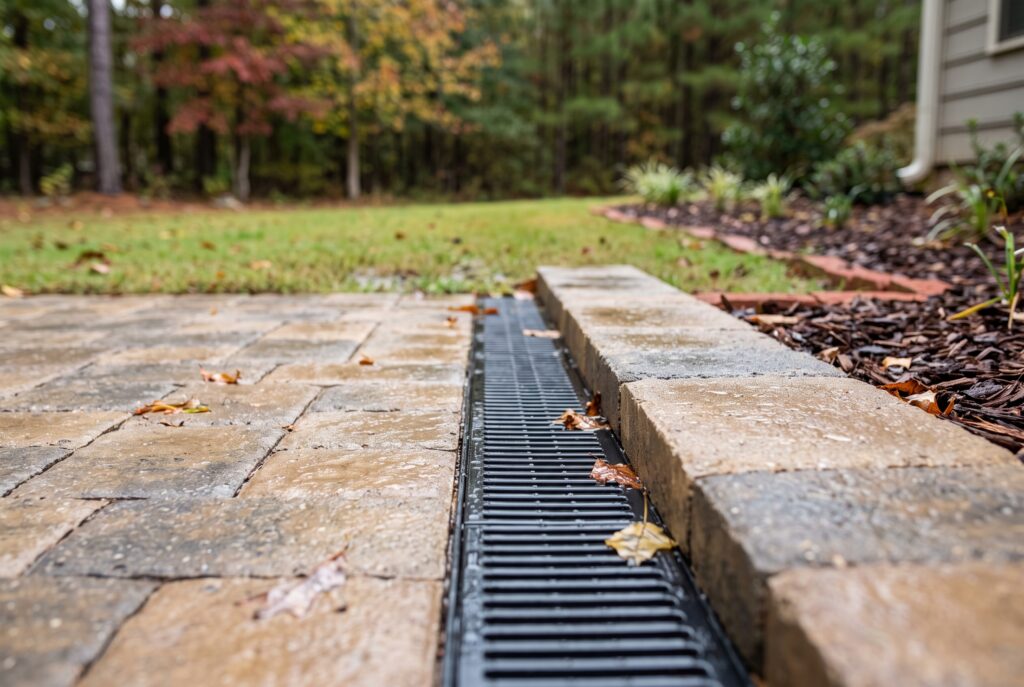
Channel drains for hardscapes
Driveways, patios and walkways shed water fast. A grated channel drain at the edge or low point catches it before it reaches the garage, the back door or the lawn below.
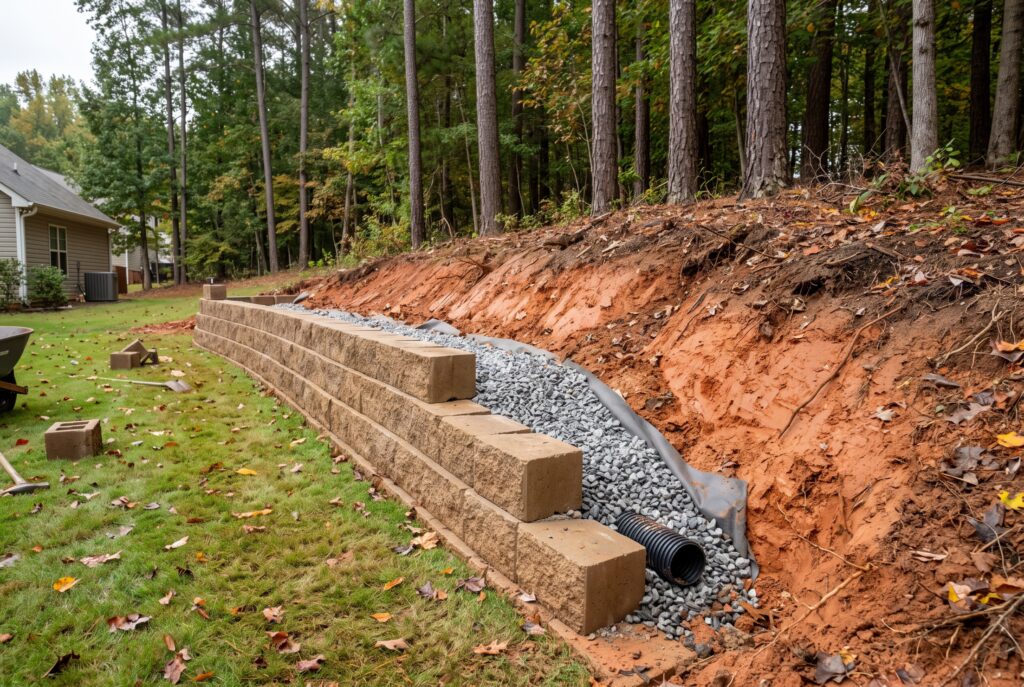
Drainage-integrated retaining walls
Most retaining walls fail because water builds up behind them. Ours are built with drainage stone and a drain pipe behind the wall, so the pressure never gets a chance to build.
Why Upstate yards hold water
Red clay and builder grading
Much of the Upstate sits on Piedmont red clay, a dense subsoil that absorbs water slowly. When a neighborhood is built, the topsoil is usually stripped, heavy equipment compacts what’s left and a thin layer of sod goes down on top. Rain that once soaked in now runs across the surface, collecting in the swales between houses, along foundations and in whichever corner of the lot sits lowest. It’s why the same problems turn up in newer subdivisions around Greenville, Greer, Simpsonville and Five Forks.
Hard rain on rolling lots
Upstate rain often arrives as short, heavy summer thunderstorms rather than slow soaking rain. On rolling Piedmont terrain that water picks up speed, cuts channels in bare soil and carries sediment off the lot. A drainage system here has to be sized for the downpour, not the drizzle.
The rules about where water can go
Greenville County has run a stormwater program since 2002 to comply with the federal Clean Water Act, and its guidance to property owners is plain: don’t block the natural path of water across your property, and don’t divert water from your property onto someone else’s. If you’re planning changes that disturb the topsoil or alter drainage patterns, the county asks you to check with its Land Development Division first. Neighborhood streams and storm drains are part of the public stormwater system that feeds the Reedy, Enoree and Saluda rivers. Properties in Anderson, Pickens and Oconee counties, or inside city limits, follow their own local rules, and we account for the right ones on every job.
Moving the water isn’t the same as fixing it
The quickest drainage fix is often a pipe that dumps the problem at the property line. That can start a dispute with the neighbors and runs against county guidance. We design every system with an outlet that’s stable and appropriate, so the water goes somewhere it belongs instead of becoming someone else’s problem. If a project needs county review, we’ll tell you before work starts.
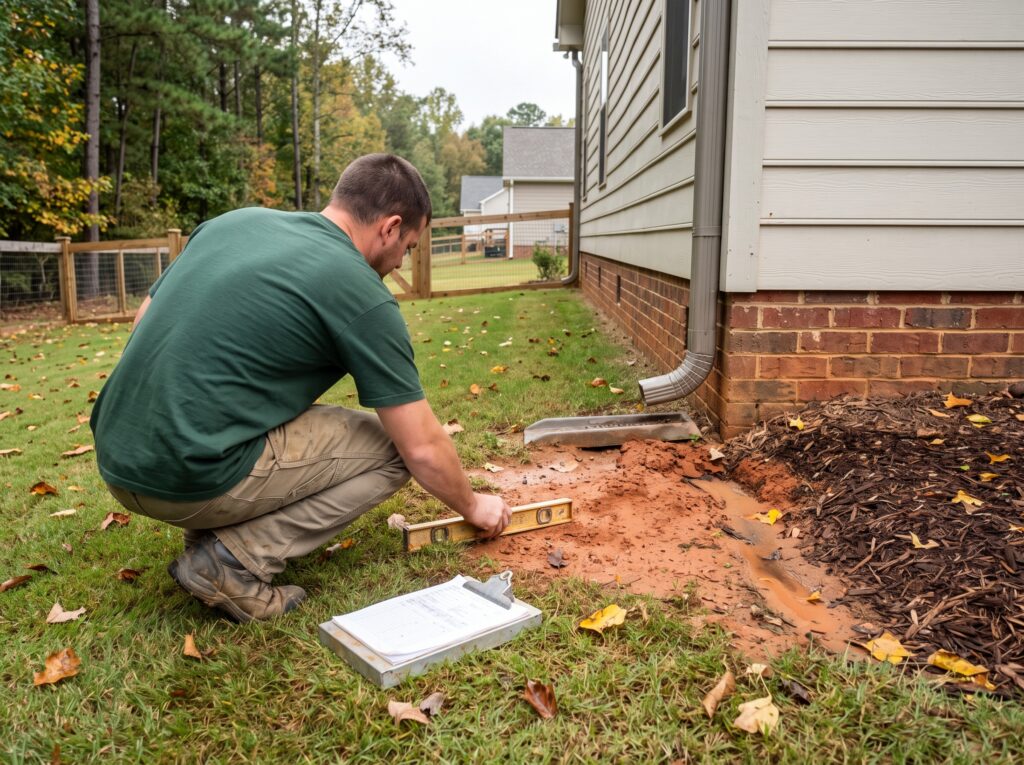
What we check on every drainage visit
- Gutters and downspouts: where each one discharges and how much roof drains to it.
- The grade along the foundation, and whether it falls away from the house.
- Where water enters the property, including runoff from uphill lots and the street.
- The low points, and whether there’s a workable, appropriate outlet below them.
- Soil type and compaction in the problem areas.
- Existing drains, pipes and emitters, and whether they’re clogged, crushed or never had an outlet.
- Utilities, easements and anything else that limits where we can dig.
You’ll know what’s causing the problem before you see a price for fixing it.
How a drainage project works
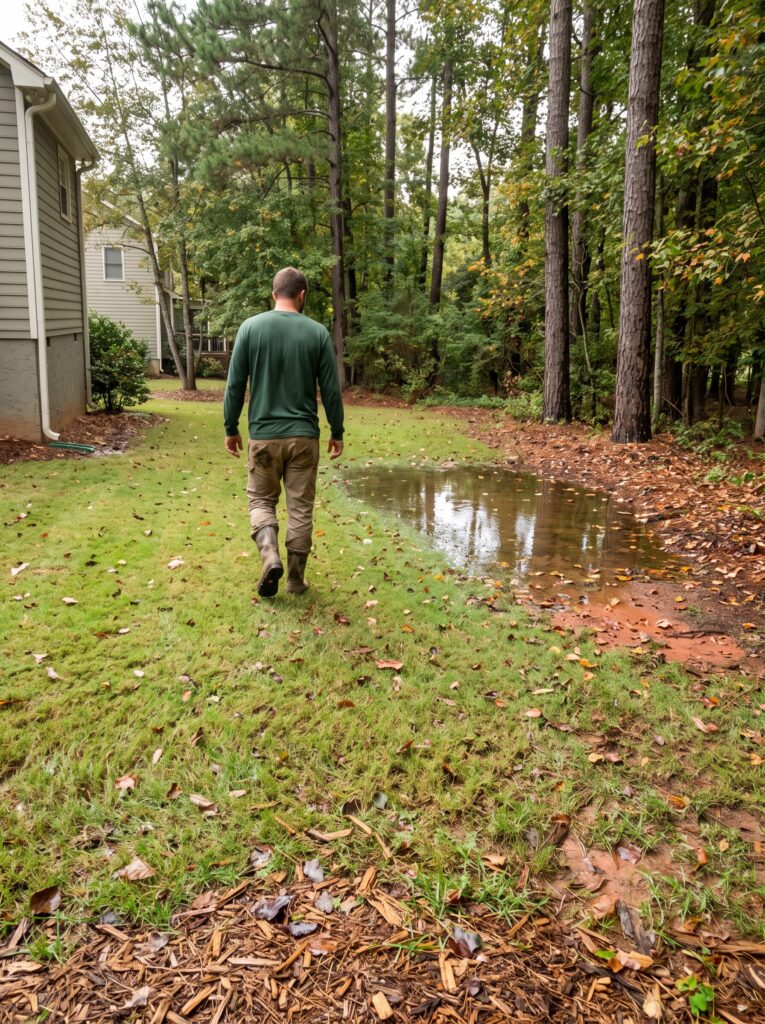
01 — We walk the property
We follow the water from the roof and the uphill side to wherever it’s collecting. You’ll hear what we think is causing it on the spot.
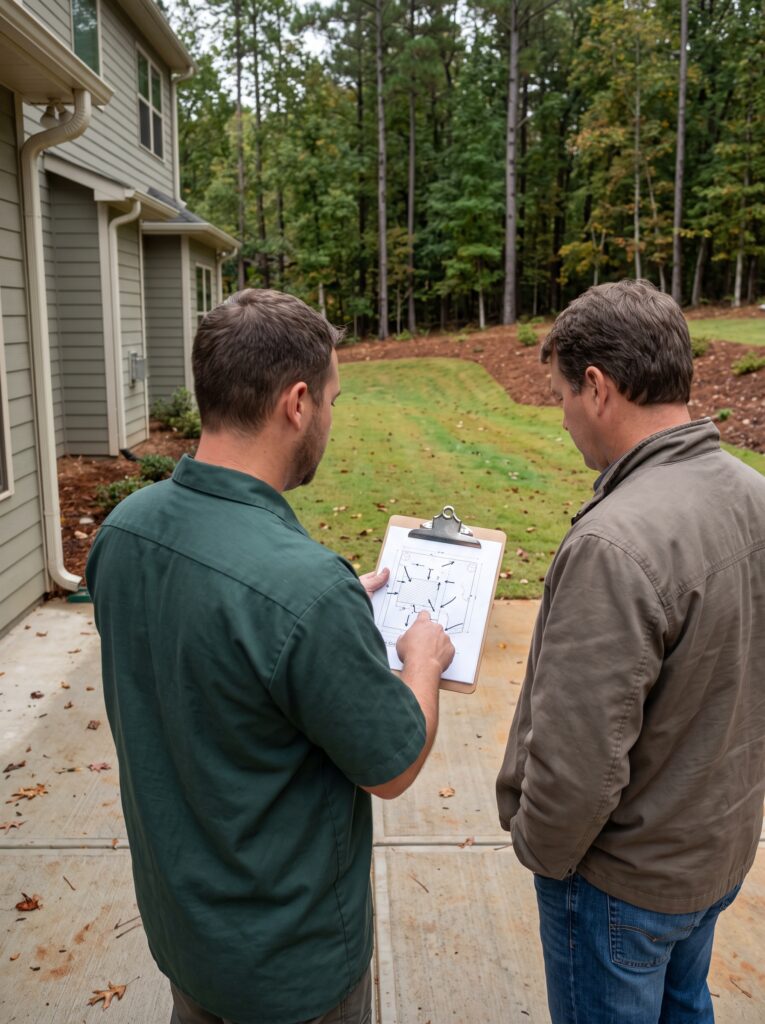
02 — You get a written plan
A scope that shows what we’ll install, where the water will go and what it costs, so there are no surprises once the digging starts.
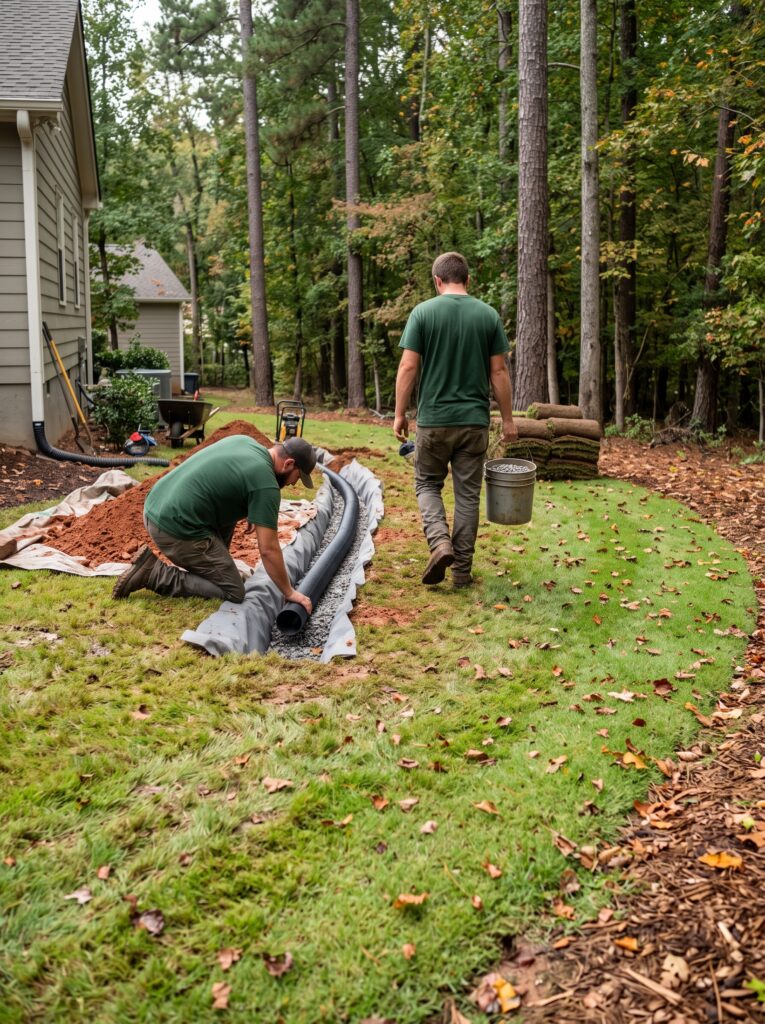
03 — We build it and restore the yard
Drainage goes in first. Then we regrade and re-sod or replant what we disturbed, and walk you through where everything runs.
Fix drainage before the next big storm
Fall and winter are the best time to tackle drainage in the Upstate. Dormant lawns recover faster from trenching and regrading, and the work is done before spring storms and summer downpours arrive. Book a site visit now.
Drainage services across the Upstate
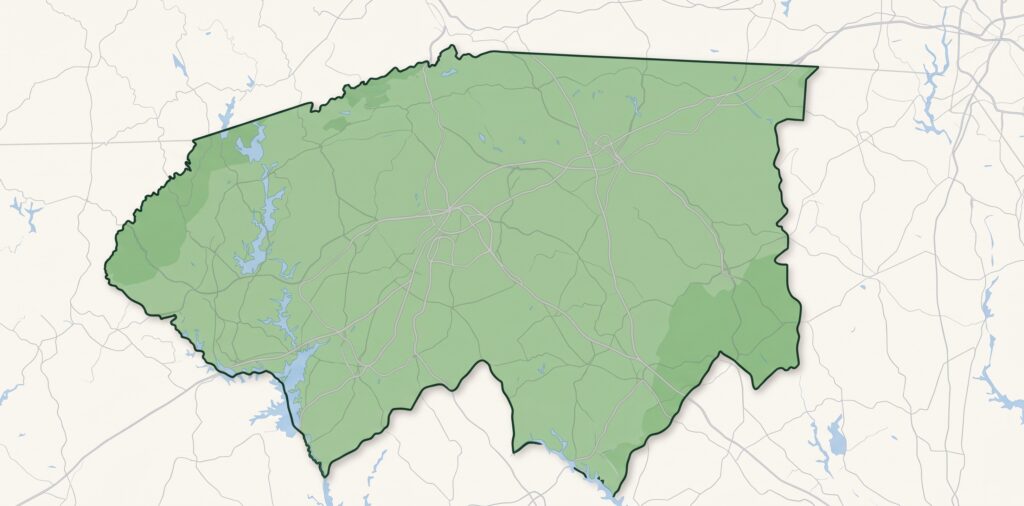
We fix drainage problems for homeowners and commercial properties throughout Greenville, Anderson, Pickens and Oconee counties. Red clay, builder grading and hard summer storms are common across the whole region, so the same problems turn up on in-town Greenville lots, in newer subdivisions and on lake properties alike.
Managing an HOA, office, retail or multifamily property? See our commercial landscaping services. Drainage is often part of a larger project, too — see design-build, hardscapes & patios and outdoor living.
Drainage questions, answered
Who fixes yard drainage problems in Greenville, SC?
Palmetto’s Finest is a licensed, insured landscape contractor that designs and installs drainage systems for homes and commercial properties in Greenville and across the Upstate. We handle the whole job, from diagnosis to French drains, catch basins, downspout lines, regrading and dry creek beds, and we restore the lawn and beds afterward.
Why does water pool in my yard after it rains?
Usually because of grading and clay soil, not the amount of rain. Upstate red clay absorbs water slowly, construction compacts it further, and water collects wherever the grade flattens or dips with no way out. Downspouts that discharge close to the house send even more water to the same spots.
What is a French drain, and do I need one?
A French drain is a gravel-filled trench with a perforated pipe that collects water below the surface and carries it to an outlet. You need one when the problem is water in the soil: ground that stays saturated, seepage at the bottom of a slope or water along a foundation. For surface puddles and runoff, regrading, a swale or a catch basin is often the better fix.
What’s the difference between a French drain and a catch basin?
A catch basin collects surface water through a grate at a low point, while a French drain collects water that has already soaked into the ground. A catch basin feeds solid pipe; a French drain uses perforated pipe set in gravel. Many yards need both.
How do I keep water away from my foundation?
Start with the roof and the grade. Make sure every downspout discharges well away from the house, ideally through a buried line, and that the soil next to the foundation slopes away from the walls. If water still reaches the foundation after that, a French drain or curtain drain on the uphill side can intercept it.
Can I send drainage water onto my neighbor’s property?
No. Greenville County’s guidance to property owners is not to divert water from your property onto another property and not to block the natural path of water. A drainage system needs an outlet that’s stable and appropriate, usually along the natural drainage path the water already follows. Water coming onto your lot from a neighbor is generally settled between the owners, and the county asks residents to contact its Land Development Division when runoff is coming from an entire subdivision.
Do I need a permit for drainage work in Greenville County?
It depends on the scope. Greenville County asks property owners to check with its Land Development Division before making changes that disturb the topsoil or alter drainage patterns, and larger land-disturbing projects can require review. We identify what applies during the site visit and tell you before work begins. Properties in other counties or inside city limits follow their own rules.
How much does it cost to fix a yard drainage problem?
It depends on the cause, not just the size of the wet spot. Cost is driven by how much water the system has to carry, the length and depth of pipe, whether regrading is needed, how far it is to a proper outlet, equipment access and how much lawn or landscaping has to be restored. A single buried downspout line and a full-yard regrade are very different projects, so we price from a site visit and give you a written scope.
Will you repair the lawn after installing a drain?
Yes. As a full-service landscape contractor, we restore what we disturb: backfilling and grading the trench, then re-sodding, seeding or replanting so the finished yard looks intentional, not dug up.
When is the best time of year to fix drainage?
Fall and winter. Lawns are dormant and recover from trenching more easily, and the system is in place before spring storms and summer thunderstorms. Drainage work happens year-round, though, and a visit during or right after a heavy rain is the most useful one.
Do you fix drainage on commercial properties?
Yes. We handle grading, French drains, catch basins and downspout routing for HOAs, offices, retail centers and multifamily communities, along with detention and retention pond cleaning. See our commercial landscaping services.
Tell us where the water goes
Describe what your yard does in a storm: where it pools, where it runs, what’s getting wet. We’ll walk the property and put a plan and a written scope in front of you.